

Asset Recovery in Kazakhstan: Orda Explores Campaign's Current Status
 Photo: Orda
More than two years ago, in July 2023, a law on the return of illegally acquired assets came into force in Kazakhstan. Since then, high-profile cases have seen oligarchs exchange freedom for their wealth — from oil companies and hotels to watch collections and Saka gold.
Recently, however, reports of fresh seizures have dwindled.
Orda.kz explores why.
Transparency
One of the key problems in Kazakhstan’s asset recovery process is the lack of transparency.
The committee under the Prosecutor General’s Office remains secretive, withholding names of those from whom property is confiscated. A fuller picture often comes from LLP "CMRA," the company tasked with managing returned assets.
While CMRA provides more detailed reports, its role is different: handling assets already returned, selling them, and transferring them to new owners. This has created an impression that both the committee and CMRA operate with inertia rather than momentum.
The Asset Recovery Committee and CMRA want to work, or they don't. The Committee is slowly considering something, but more about returning the money illegally transferred outside of Kazakhstan. And I think that we need to reformat this work, no longer within the framework of the campaign. Why was there a campaign? Because the state did not have permanent instruments. Now we need to introduce all this into the legislative norm. Ideally, we need to talk about the legalization of assets and, oddly enough, crypto assets. If we bring all this into the public sphere as much as possible, then we will, of course, spend fewer resources,says financial analyst Rasul Rysmambetov.
Political scientist Valery Volodin adds:
We see a classic trajectory of a campaign body: a period of mobilization activity with high-profile cases and symbolic sanctions has given way to a phase of administrative inertia. The mandate for asset recovery remains broad, but the actual vector has shifted from search and confiscation to administration of what has already been seized and distribution of proceeds.

Auctions and Market Demand
It is difficult to understand whose assets the relevant committee is looking for abroad (and whether it is looking at all). It is somewhat easier to evaluate the work of CMRA, which is covered in sufficient detail in the public sphere. And one can conclude that the "trophy" wealth of oligarchs is not being sold off as successfully as the state would like.
The company managing the returned assets explained to us that it sells the confiscated property "per the principles of legality, transparency, and efficiency." Since the beginning of 2025, 53 seized assets have been sold at auctions for a total of 296.8 million tenge.
These are mainly movable property:
- Jewelry
- Expensive watches
- Collectible coins
Among the most expensive items sold by the company this year are the Patek Philippe World Time Chronograph Green Mecca Edition, which went under the hammer for 36.3 million tenge, and the Patek Philippe Nautilus for 26.5 million tenge. As for jewelry, a whole collection of rings, bracelets, earrings, and other ornaments was sold for a total of 36.1 million tenge.
In total, as of August 11, 2025, the management company sold 72 assets for a total of 48.1 billion tenge (excluding VAT). Of these, 65 assets located in Kazakhstan were sold through the E-Qazyna electronic platform. The total amount raised from online trading was 25.9 billion tenge. Two cars, two residential buildings, one apartment and two villas were successfully sold abroad. The total amount raised from these transactions was 22.2 billion tenge,
CMRA wrote.
CMRA sells jewelry, watches, and coins quite effectively — although these items often need to be put up for auction multiple times due to a lack of buyers.
However, in 2025, only two pieces of former oligarch real estate were sold. The first was a non-residential building on Mukhamedkhanov Street in Astana, sold for 96.8 million tenge. The second was a plot of land near the village of Shamalgan, sold for 217 million tenge.
According to unofficial information, the land previously belonged to one of Kairat Boranbayev's companies.
Attempts to find new owners for commercial premises and residential buildings have not been particularly successful.
The most striking example is Karim Massimov's mansion with a swimming pool, disco bar, theater, and 30 rooms: no one wants to buy it, and the state ultimately refused to take such real estate on its balance sheet.
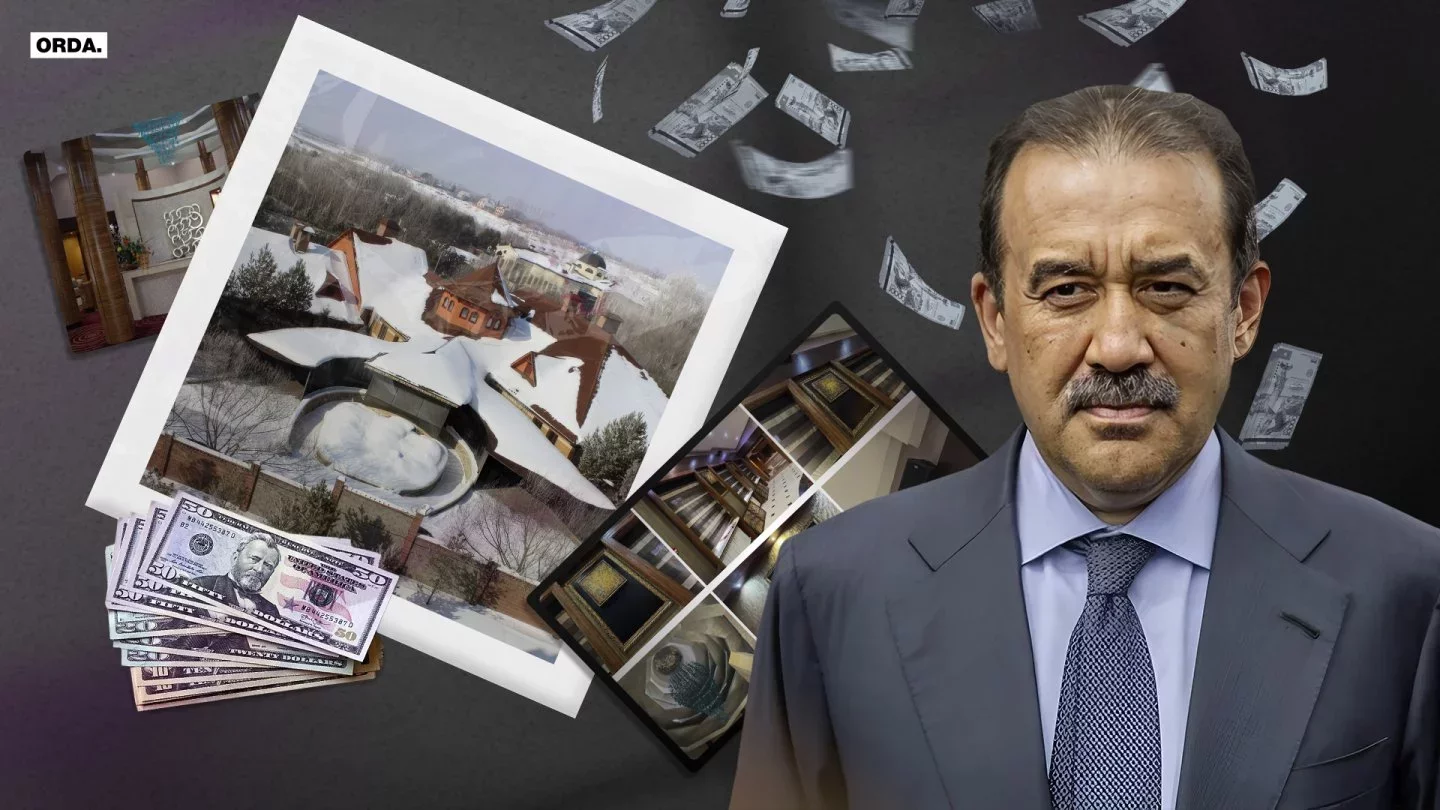
The price has already dropped by 40% from the original, but even this has not helped find a buyer for an asset with such a dubious past.
CMRA, created as a state company for managing seized assets, is actually operating in the liquidation mode of the remains: it stores, evaluates and sells. The structure is correct, but the efficiency has fallen. 'Heavy' assets like the Masimov mansion are selling poorly, auctions are disrupted, prices have to be reduced. This is a sign that there is simply no normal demand for such lots, notes political scientist Valery Volodin.
CMRA emphasizes that it is not directly responsible for returning assets. Its task is to ensure effective and transparent management of confiscated property (and, if necessary, sale). Therefore, it has no planned performance indicators.
Out of 218 assets put up for auction, only Massimov's mansion was withdrawn, following an official request from the Akimat of Astana to transfer it to state ownership.
CMRA does not believe that the failure to sell the former head of the KNB’s house has harmed the company’s image — or the broader narrative of asset recovery.
This decision reflects the flexibility and social responsibility of the management company, but not a failure. The management company ensures transparency and legality of all procedures. All trades are held on the E-Qazyna platform in an open online format. We see no reason to consider the current dynamics of sales negative for the reputation. On the contrary, practice shows a high level of interest in trades and growing trust from society,
stated in CMRA.
Still, it must be acknowledged that the demand for seized assets is very limited. On this market of unprecedented luxury, supply will inevitably exceed demand.
Financial Outcomes
As of mid-August 2025, 25.8 billion tenge had been transferred to the Special State Fund, with 24.7 billion from sales and 1.1 billion from asset management. In total, the campaign has raised 1.2 trillion tenge.
The reporting looks impressive: 1.2 trillion tenge in total, 354 billion tenge came into the budget this year. But if you look closely, most of this money came from old cases and confiscated cash, not new high-profile seizures. There are practically no new names. Hence the conclusion: either they have stopped stealing in our country of incredible prosperity, or no one has given a new command 'Shoot!'jokes Volodin.
The legal framework also allows oligarchs to voluntarily return assets, but the high entry threshold narrows the pool of potential contributors, explaining the absence of new names in recent reports.
Risks and Future Directions
Rysmambetov warns that excessive pressure on domestic business could drive oligarchs to move assets offshore, repeating Russia’s experience:
Excessive campaigning and public hanging of oligarchs only make the market nervous. Everyone understands: today they bother these ones - tomorrow they will come for me. If, for example, an oligarch has 20 factories that he develops, gives people jobs, then I have no complaints about this oligarch. Let him continue. Yes, you can tell him: let's create another thousand jobs, what do you need for this? Tomorrow, not everyone will go to work in government agencies, someone must manage these enterprises, develop them. So, let's say the state took the factories. And then what? Give them to the akimat for management?
The analyst advises limiting the return of assets to the money and property that were taken outside of Kazakhstan:
Why did we end up with so much of the Russian corporate sector? Because our oligarchs started saying: that's it, they're coming for me tomorrow, the state is already looking in my direction and sharpening its knife. And as part of an emergency sale, they started selling everything at any price to Russians, who were taking their business out of Russia at that time.
Major Kazakh businessmen who could theoretically become targets of a new campaign to return assets are not showing any desire to withdraw capital from the country or suddenly emigrate. Those who wanted to leave already have backup plans, but they still keep key enterprises and property in Kazakhstan:
Excessive "war communism" and revolutionism make business nervous. I understand that posts on Facebook are getting thousands of likes about how we need to return something else, take something else away, hang someone. But we are not doing all this for likes. We are doing it to preserve and develop business, to create jobs, and so on, Rasul Rysmambetov says.
According to Valery Volodin, the committee under the Prosecutor General's Office and CMRA are still operating bodies, but they are now a soft way to remind major players that the state, like the truth, is somewhere nearby:
If the goal is to discipline capital and redistribute resources, then we simply need to change the approach, expanding the circle of those being audited, speed up sales, and eliminate overly soft agreements. Otherwise, we will see what we have seen many times: a ritual body that exists only for the sake of reporting, and not for the sake of results.
Original Author: Nikita Drobny
Latest news
- The War in Iran Opens a Window of Opportunity for Kazakhstan’s Oil Sector, Analysts Say
- Iran Conflict Escalates Beyond the Gulf: What Kazakh Experts Say About Risks for Central Asia and Kazakhstan
- Kazakhstan Prepares Possible Evacuation of Its Citizens From Iran
- LRT in Astana Is Reaching the Finish Line: The Launch Is Expected in the Coming Months
- Kazakhstan Ready to Help the UAE Amid Escalation in the Region
- Tokayev Discusses Middle East Escalation With Qatar’s Emir
- Airlines Ready to Bring Kazakhstanis Home From the Middle East
- Tokayev Sends Support Messages to Gulf Leaders Amid Regional Escalation
- Kazakhstan Bans Its Airlines From Flying Over Several Middle East Countries
- Astana Strengthens Security Measures Amid Escalation Around Iran
- Tokayev Meets U.S. Ambassador Stufft, Discusses Board of Peace Cooperation
- Mangystau Launches AI-Assisted School Monitoring to Prevent Teen Suicidal Behavior
- Kazakhstan to Supply UK With Critical Minerals
- AI Faculties for Educators to Open in Kazakhstan: What Other Changes Are Coming to the Education Sector
- There Are Medals — But Not Enough Ice: What’s Happening to Figure Skating in Kazakhstan
- Is Kazakhstan’s Nuclear Power Plant Project at Risk After New UK Sanctions? Rosatom Responds
- Prosecutor General’s Office Suspends Extradition of Navalny Ex-Staffer Detained in Almaty
- Former EBRD Executive Jürgen Rigterink Elected as New Independent Director on Bank RBK’s Board of Directors
- Kazakhstan Near Bottom of Retirement Comfort Ranking
- Kazakhstan to Open New International Flights Across Asia, the Middle East and Europe
