

Analyst Explains Sharp Weakening of Tenge
 Elements.envato.com
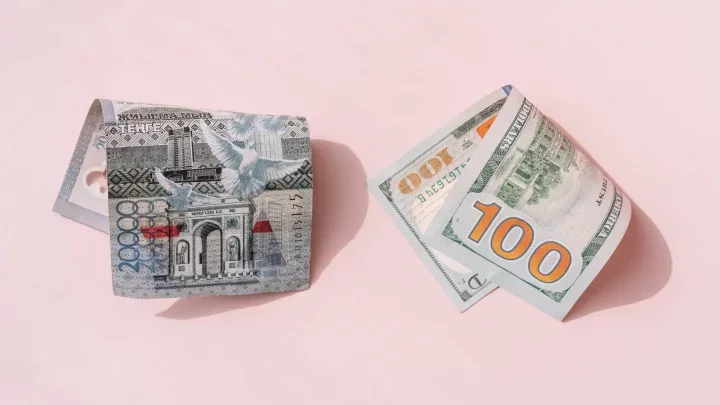
Halyk Finance analysts have published a report on the reasons for the tenge's weakening. They believe that the National Bank is ineffectively regulating the currency market, Orda.kz reports.
Halyk Finance notes that on October 1, the average daily dollar exchange rate was 480.35 tenge per dollar.
On October 10, the national currency weakened to 491.74 tenge per dollar. The National Bank reacted only the next day, announcing that it was suspending the purchase of dollars for the ENPF investment portfolio. The tenge later regained some ground (486.86 tenge per dollar).
According to Murat Temirkhanov, Advisor to the Chair of the Board of Halyk Finance, the National Bank's exchange rate policy is ineffective.
The regulator allows sharp fluctuations in the exchange rate, negatively impacting the economy. The population and businesses are now expecting a further decline. Thus, Kazakhstanis are increasingly buying foreign currency. October's purchase amounted to $272 million, almost twice as much as a year ago, contributing to a further fall in the tenge exchange rate.
However, according to Halyk Finance, increased demand for dollars is not the main or only reason for the tenge's weakening.
In May of this year, the volume of dollar trading on the currency exchange was the highest this year and amounted to 5.1 billion dollars. At the same time, the average dollar to tenge exchange rate in the same month was the lowest this year - 442.19. Judging by the current dynamics of trading on the exchange, in October the volume of US dollar trading will be approximately the same as in May, but the rate on October 10 has already broken the psychological barrier of 490 USD/KZT,emphasizes Murat Temirkhanov.
Analysts question the National Bank's tactics for purchasing dollars for the ENPF's needs. The regulator buys currency for the pension fund to smooth out sharp changes in its sale from the National Fund's reserves. These fluctuations can have ambiguous consequences for pension fund depositors. According to Murat Temirkhanov, the National Bank should have stopped purchasing currency for the ENPF immediately as soon as the tenge exchange rate began to fall.
Letting the tenge exchange rate "drop" is impossible now, Halyk Finance is sure: the currency market in the country is poorly developed, and only five organizations occupy an overwhelming share of the volume of transactions, and the market of futures, options, and other exchange instruments on the currency exchange is almost absent.
At the moment, there cannot be a 'free float' of the tenge in Kazakhstan. This is directly related to the small size and underdevelopment of the foreign exchange market in Kazakhstan. As the National Bank itself noted in its report on financial stability for 2023, the foreign exchange market in Kazakhstan is highly concentrated and has too homogeneous a structure of participants, notes Murat Temirkhanov.
Therefore, an imbalance between supply and demand regularly surfaces in Kazakhstan's currency market, keeping the rate volatile. If the National Bank does not intervene, the volatility may worsen.
We believe that the National Bank should officially acknowledge that a managed floating regime for the tenge is in place and that it will be maintained until the full development of the stock, money and currency markets in Kazakhstan,” the Halyk Finance report says.
The regulator will have to explain consistently what influences the national currency and why.
Detailed comments will boost trust in the National Bank and the tenge as a whole, and the population and businesses will have an idea about future dynamics.
It is also very important that the National Bank stops using ENPF funds to neutralize the volatility of currency sales from the National Fund. To manage the tenge exchange rate, the National Bank must use its own currency interventions based on specific and public regulations,concludes Murat Temirkhanov .
Original Author: Nikita Drobny
Latest news
- Orda.kz Editorial Team to Cease Operations on September 1
- The Price of a Degree: How Students in Kazakhstan Pay for University
- Second Przewalski’s Horse Foal Born as Species Returns to Kazakhstan
- Kazakh Mining Companies Can Recalculate Purchases if Tenge Weakens
- Kazakhstan Names First Vice President in Three Decades
- What Almaty’s Bus Shelters Are Missing
- 400-Truck Queue Builds at Kazakh–Kyrgyz Border
- Kazakhstan Ready to Help Feed and Rebuild Gaza
- Tokayev Establishes New Presidential Security Body
- Almaty Takes Back Its Nearly Century-Old Hippodrome
- No More Guesswork on Savings: Kazakhstan Tightens Energy Audits for Businesses
- Public Money Could Be Used to Rescue Failing Kazakh Banks
- Third Kazakh Woman Reported Missing in Nepal-China Flood Zone
- Falconer Convicted Over 35 Protected Birds, Spared Punishment Under Amnesty
- Kazakh Citizen Detained in Yakutia in Phone Fraud Case
- Yuan Instead of Dollars? KazMunayGas Draws Record Demand in Asia
- China Gains Oil-Market Influence as OPEC+ Weakens
- Kazakhstan to Divide Smartphones Into White, Gray and Black Lists
- Kazakhstan’s Government Formally Resigns as First Kurultai Session Opens
- Rare Lynx Sighting Recorded in Northern Kazakhstan
