

What Remains of the House of Composers Near Almaty — and Why Is the Land Worth So Little?
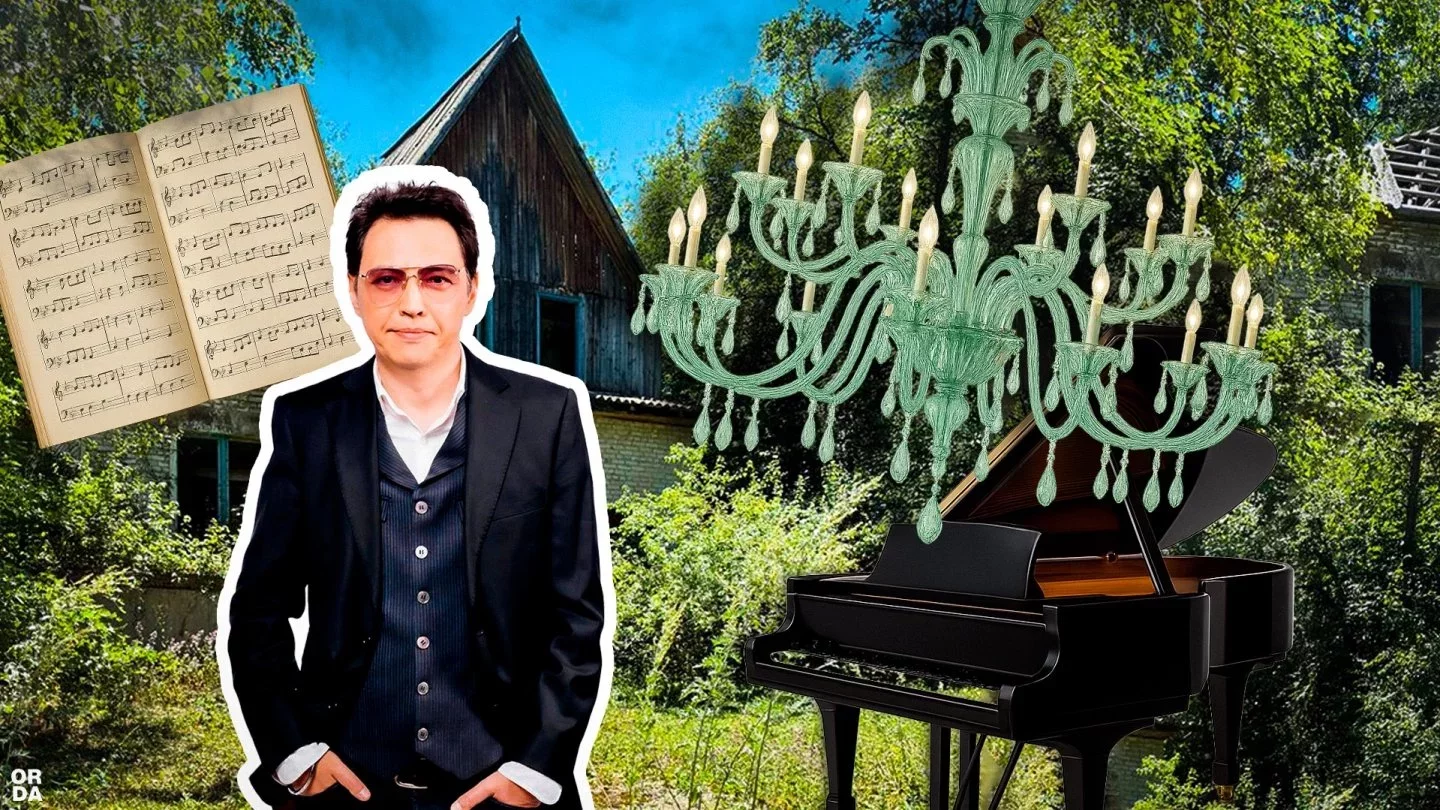 Photo: Orda.kz
Musician Aidos Sagat shared on social media how, as a child, he spent time with his father, a renowned composer, at Tau-Turgen, a holiday retreat for the creative intelligentsia near Almaty.
He recalled it as a wonderful place. Orda.kz set out to discover what the site is today, what it looks like now, who owns the land bordering Ile-Alatau National Park, how much it is worth, and whether there are plans for its future.
Lust for Land
The Almaty region, known for its natural beauty, hides a cultural gem in its mountains. The seven-hectare plot borders the Ile-Alatau National Park and, for decades, served as a retreat for artists and composers.
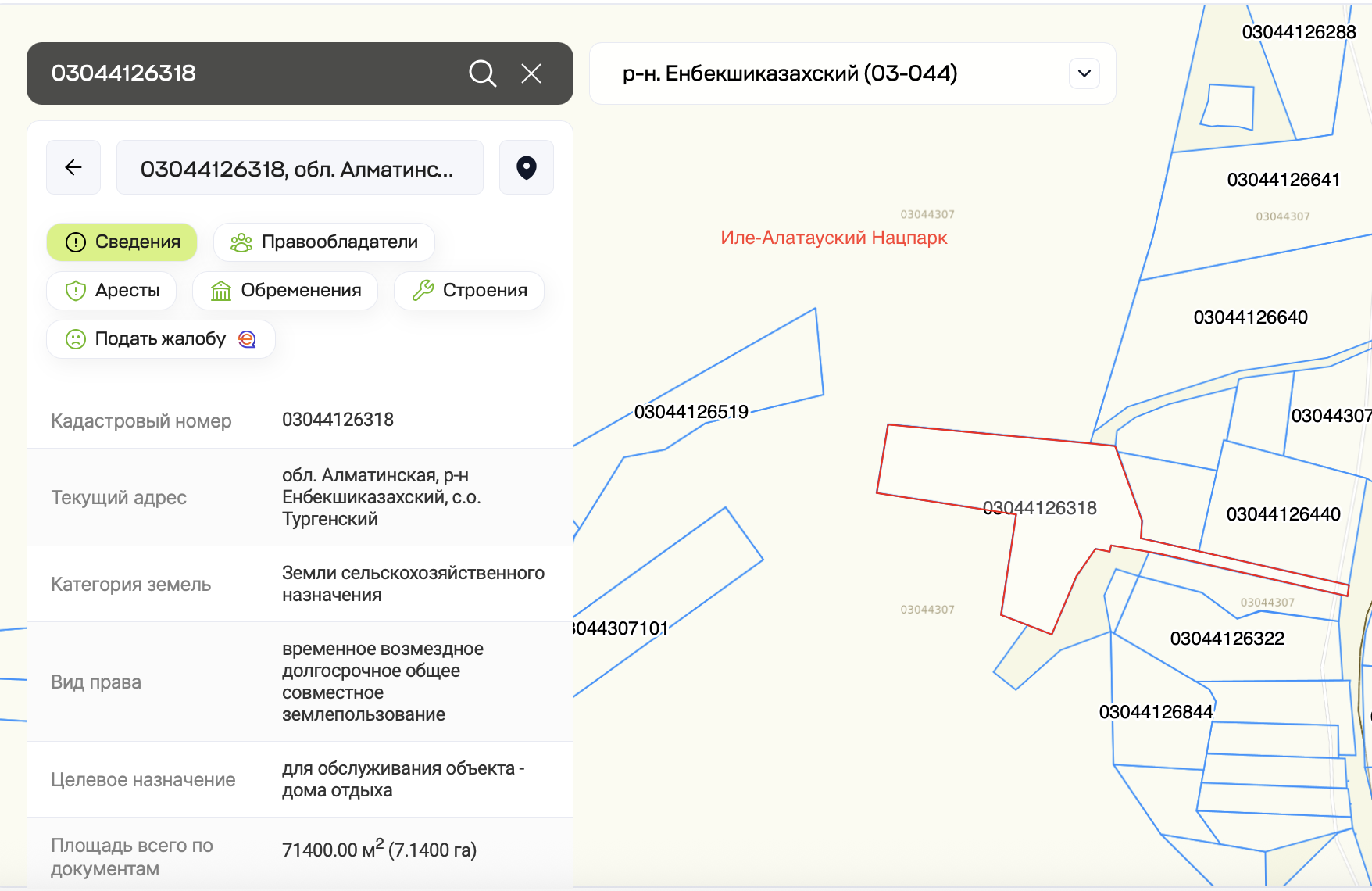
The state retained the land until 1994, after the Soviet collapse. In 2011, it was transferred for a nominal amount to the Kazakhstan Composers’ Union.
At the time, the union was chaired by Balnur Kydyrbek, with 24 composers listed as founders. For years, the land stood idle — investors were wary of special land-use restrictions, and the composers could not agree on how to use it. This year, an investor finally appeared.
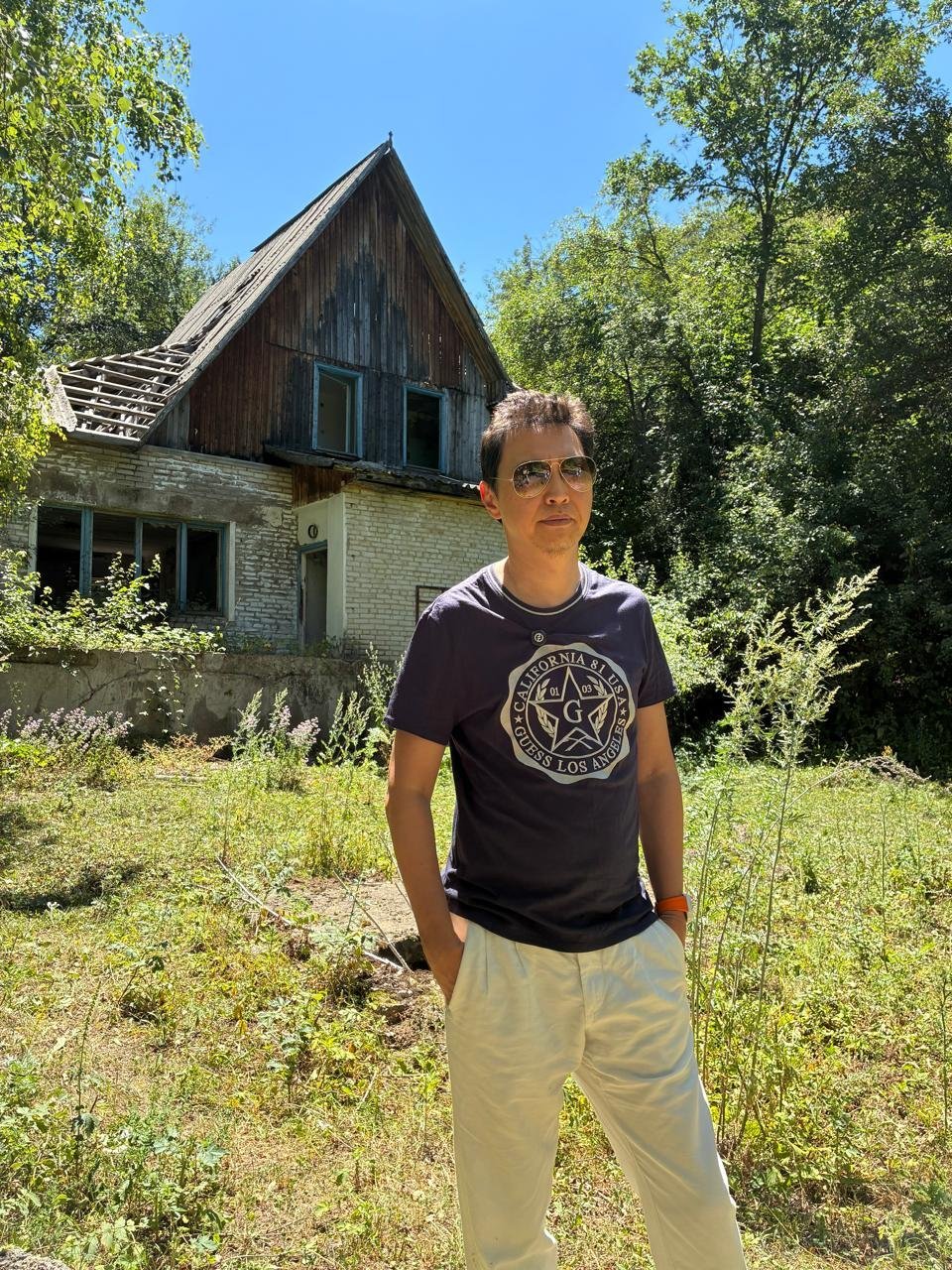
In June, Aidos Sagat — Kazakhstani singer, composer, producer, poet, and founder of the pop group URKER—visited the site with his family. His video from the location went viral.
Fifteen fully furnished cottages with German grand pianos, a main building with a dining hall, cinema, and billiard room. The entire musical elite lived and worked here. Families received discounts, and composers from other republics came too — cultural exchange thrived. Guests climbed mountains, swam in rivers, and in winter the snow sparkled so brightly it was blinding, Sagat wrote.
He listed composers who had stayed there and described the furnishings in detail. In his memory, it was a magical place.
But today, the abandoned retreat looks like the set of a horror film.
The Search
One morning, Orda.kz journalists set out to find the forgotten House of Creativity.
Finding the site was not easy—they stopped several times to ask for directions and ended up in the wrong place more than once.
A drone was eventually launched to scan the area. The scenery was stunning, though deserted except for a few roaming horses. After several hours, the journalists finally reached the site.
The contrast was striking: lush southern landscapes alongside derelict buildings. To understand why such a valuable asset was abandoned, they turned to Aidos Sagat, who agreed to speak.
“Without the Past, There Is No Future”
Sagat admitted he was surprised by the public’s reaction to his post about the Tau-Turgen House of Creativity. Given that the retreat was founded and thrived in the Soviet era, he said, remembering and reassessing it today is not simple. Still, he emphasized: “Without the past, there is no future.”
All creative organizations — the Union of Composers, the Union of Writers, the Union of Artists, and others — were state-subsidized. That was standard practice in those days — for a fairly long period, nearly 70 years. The USSR Music Fund oversaw the finances of the Union of Composers and distributed funds among the 15 republics. Each republican union received a budget to address material issues. Much, however, depended on how skillfully the leadership could secure additional funding—for instance, for the construction of houses of creativity or other facilities. Such houses existed only in a few republics, Aidos Sagat recalled.
Sagat first visited the Kazakhstan Creative Center as a child, accompanying his father, Mansur Sagatov—a renowned Soviet and Kazakhstani composer and student of Vasily Velikanov.
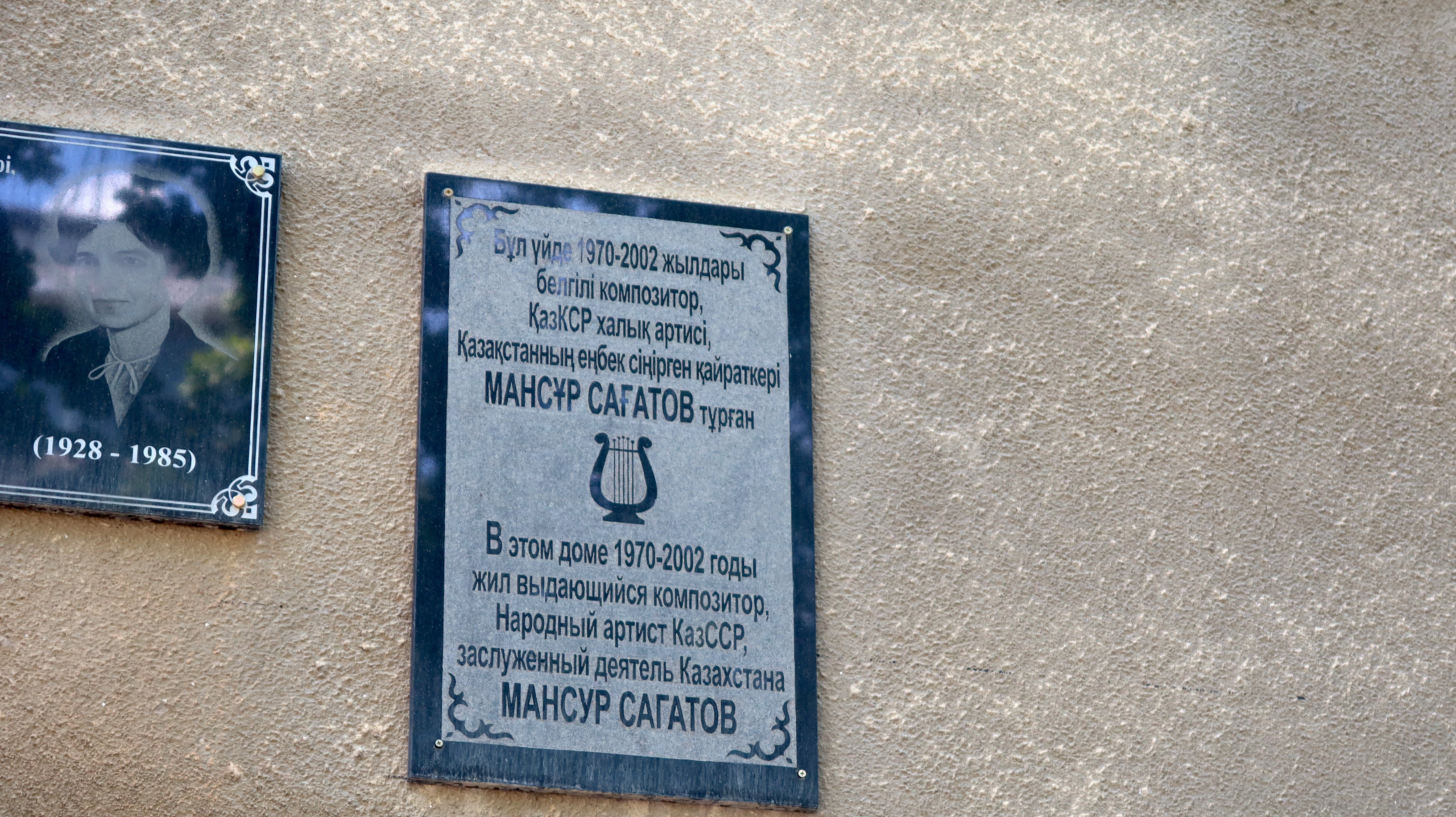
Mansur Sagatov’s career developed rapidly. Immediately after graduation, he became editor-in-chief of music broadcasting at Kazakh Radio.
From 1974, he served as senior editor on the repertoire and editorial board of the Ministry of Culture of the Kazakh SSR, and from 1977, he taught instrumentation at the conservatory.
He composed the ballet Aliya, the cantatas Song of the Akyn and Festive, the symphonic picture Mergen, a violin concerto, the poem Dialogues, as well as numerous choral works, romances, and songs.
Many of these pieces were written at the Tau-Turgen Creative Center, where he often brought his son.
Aidos recalls that his father visited Tau-Turgen at least twice a year, in winter and summer, sometimes alone for weeks of uninterrupted work. Families also joined, and the atmosphere was both productive and lively.
Sagat remembers the early to mid-1980s as the most active years of the creative retreat, though it also managed to survive into the early 1990s.
Fifteen two-story cottages—brick, built for winter, real solid houses. On the first floor stood a German grand piano and sofas, where people usually sat for tea or welcomed guests. Upstairs there was a bedroom, a bathroom, and a toilet. Downstairs there was another toilet. All the utilities were in place. The only thing missing was the internet—because it simply hadn’t been invented yet. Otherwise, everything was there: houses lining the gorge, pathways, lighting, flowers, flowerbeds, fountains, sculptures. And then there was the main building—absolutely fantastic. It had a dining hall with its own kitchen. Excellent chefs served four meals a day: breakfast, lunch, afternoon tea, and dinner. Down in the basement was a bar. Though it was never open when I was there, it looked beautiful: leather chairs, everything just as it should be. And right next to the dining hall was a billiards area — an incredible one, Swedish or maybe Finnish.
Upstairs, there was a movie theater with 150 seats, a stage, and even a piano. Films were brought in once a week, usually on Saturdays, and they were always the latest releases.
Equally unforgettable was the chandelier in the main building. It cascaded from the high ceiling almost to head level on the first floor, made of Czech crystal with a faint greenish tint, shimmering like a waterfall. At the time, it cost 40,000 rubles — the equivalent of four Volga cars.
Where the chandelier is now remains a mystery. The rest of the interiors were simpler but welcoming — parquet floors, tiled stoves, wooden shutters, and wallpaper, traces of which can still be seen.
Local villagers staffed the estate as cooks, guards, drivers, and hostesses, providing service “as if visiting dear friends.” The retreat also had its own administration and accounting office.


Composers paid a fee to stay in the gorge; they received a substantial family discount of about 50%. Others could also come, but only if places remained after union members had been accommodated.
While working on this article, the editors sent numerous inquiries to regional archives and cultural departments. No records were found, but the Ministry of Culture provided information on those who once stayed at the Creative Arts Center.
Among them were outstanding Kazakhstani and Soviet composers such as Gaziza Zhubanova, Yerkegali Rakhmadiyev, Boris Yerzakovich, Kudus Kuzhamyarov, Almabek Meirbekov, Artyk Toksanbayev (now head of the union), Adil Bestybayev, Kuat Shildebayev, Rigul Zhunussov, and Tolegen Mukhamedzhanov.
Leading Soviet composers and educators were also invited as consultants, including Avet Terteryan, Nikolai Sidelnikov, Firengiz Alizade, Valentin Grabovsky, Pavel Rivilis, Dmitry Smolsky, Igor Kefalidi.
Visitors came not only from Kazakhstan, but also from Russia, Belarus, Ukraine, Uzbekistan, and Kyrgyzstan. Writers, critics, and musicologists joined as well. The center hosted seminars, meetings, and informal gatherings, and often invited well-known composers for discussions.
Gradually, the House of Creativity emptied. The USSR Music Fund was dissolved, funding stopped, and the staff who had maintained the retreat left to find other work.
Value of the Land
Today, the cadastral value of the seven-hectare plot is just 21 million tenge, though its market value is assumed to be much higher.
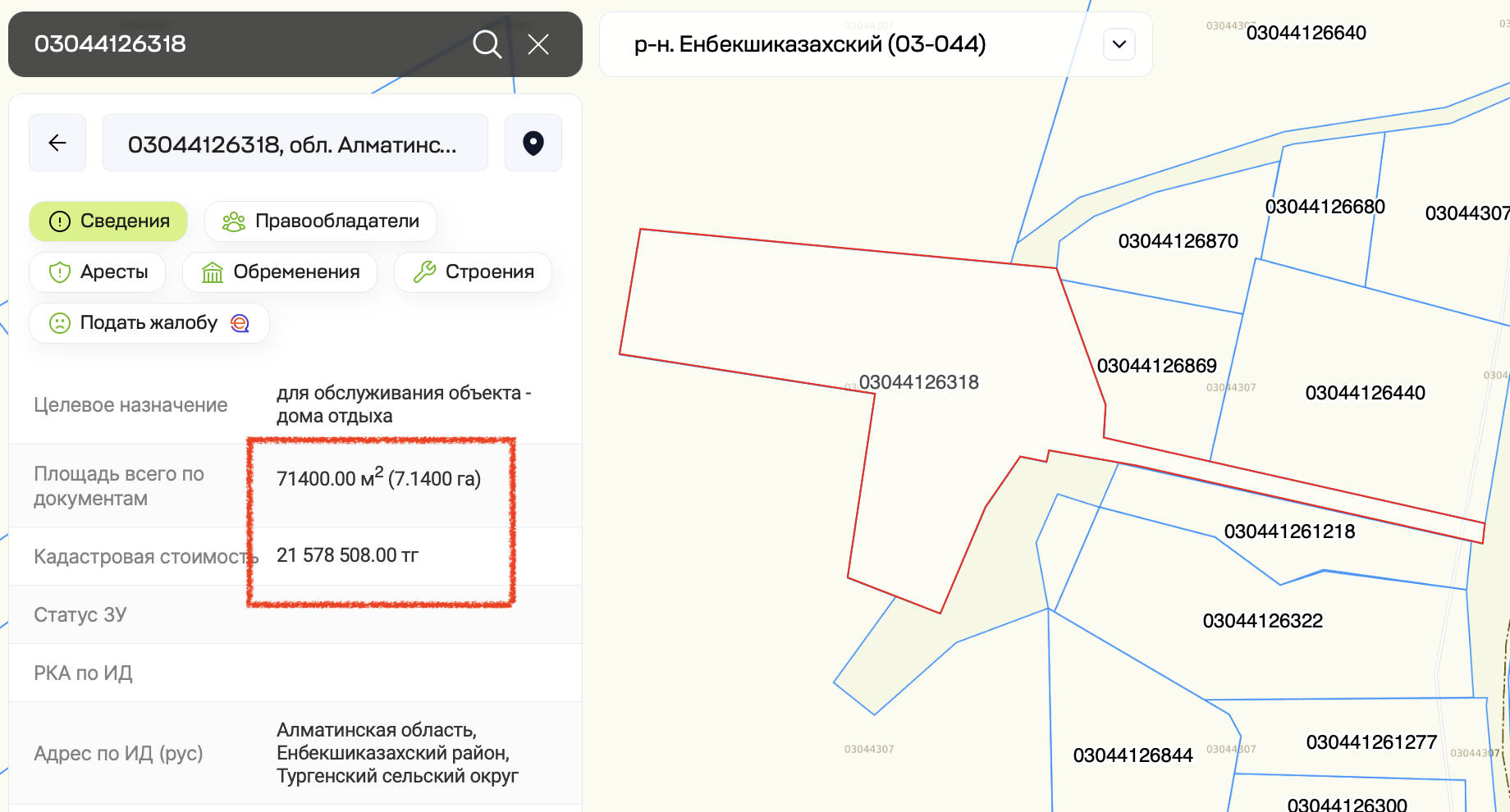
Seven hectares of land near Tau-Turgen equal 700 ares, or 70 dacha plots of 10 ares each. At market rates, this could suggest a value of around 700 million tenge, based on an average price of 10 million per plot.
In reality, the figure would be far lower: utilities such as gas, water, and electricity would need to be reinstalled, and the site’s designated use imposes strict limits.
The land also carries political baggage. Southern areas of the national park are informally tied to former president Nursultan Nazarbayev. In 2022, Azattyq-ruhy reported that some parcels owned by his brother Bolat were reclassified for “industry, transport, defense, national security, and space activities” — a striking contradiction for what should have been farmland or protected land.
To understand the real value, prospects, and risks, Orda.kz asked architect Zhanna Spooner for her expert view.
The cadastral value rarely reflects the real market price, especially for unique locations. Proximity to a national park is both an advantage and a limitation. Investors likely see this site as a rare asset with high potential, but also high risk, said the architect.
The House of Composers’ land is officially designated as agricultural, intended for use as a holiday resort.
Any large-scale commercial project would require rezoning—a lengthy process involving both legal and environmental approvals. According to Spooner, this is a key constraint.
The old buildings may or may not be restorable—that’s a matter for expert assessment. Sometimes a structure can be adapted while retaining its spirit. Personally, I would try to restore the historic houses and carefully integrate new ones. With the trees, the first step should be a forest pathology study and a dendroplan, to determine what can be preserved and what must be replanted. The environmental component must be built into the project from the very start, she added.
What kind of project could be appropriate? Spooner believes the sanatorium is not just land, but cultural heritage.
Its unique setting allows for possibilities, but also requires sensitivity.
In my view, this place could naturally evolve into something connected with quiet recreation, culture, music, and creativity—functions that sustain the spirit of the site rather than contradict it. It could be a small center for creative residencies, a boutique hotel with an intimate atmosphere, or a modern retreat focused on ecotourism. There is also strong potential for developing a “slow tourism” model — rest without rush, centered on silence, nature, and culture.
According to her, the main risks revolve around cultural loss and environmental damage. A project aimed at quick profit, she noted, would likely lead to chaotic development and public backlash.
Legal complications also remain a concern, since the land category and its designation would need to be amended to avoid future disputes. On top of that, there is a social dimension: society tends to view such places as part of its shared heritage, so any lack of transparency could easily provoke suspicion.
The Union of Composers has not yet disclosed details of the planned project, which is still under discussion with an investor.
Original Author: Alexandra Mokhireva
Latest news
- Astana Could Become An International Aviation Leasing Hub
- Kazakhstan’s First Tagged Eurasian Black Vulture Found Dead in India
- Kazakhstan Replaces Russian Turbines With Chinese Equipment for Ekibastuz Power Plant No. 2
- How Kazakhstan, Uzbekistan, And Azerbaijan Will Export Electricity To Europe
- Kazakhstan Explains How Russians Who Fled Mobilization Can Be Deported
- Kazakhstan and Japan discuss hydrogen partnership with export potential
- Russia Thanks Tokayev for Initiative to Support Russian Language
- Almaty Could Restrict Cars Under Beijing-Style Anti-Smog Plan
- Tigers in Kazakhstan Are in No Rush to Breed
- What Changes Are Being Prepared Under the New Tax Code
- Alcohol and Tobacco Prices in Kazakhstan See Sharpest Monthly Rise in 15 Years — Analysts
- Middle East Conflict Will Not Lead to Higher Gasoline Prices in Kazakhstan — Minister
- Five Regions of Kazakhstan Face Higher Flood Risk This Spring
- Kazakhstan Ratifies Turkic States Civil Protection Deal
- Astana Enters Top 100 Safest Cities as Smart City Project Expands
- Almaty Cameras to Record New Driver Violations Starting March 12
- Kazakhstan Suspended 11 Polling Stations Abroad Due to Middle East Escalation
- Kazakhstan’s Foreign Ministry Comments on Disappearance of Citizen After South Korea Factory Fire
- ChatGPT Among AI Tools Recommended for School Lessons in Kazakhstan
- Missing Kazakh Woman Found in Vietnam Four Days Later
