

Marshrutka vs. Shuttle: Why Kazakhstan Is Reinventing the Main Public Transport of the 1990s
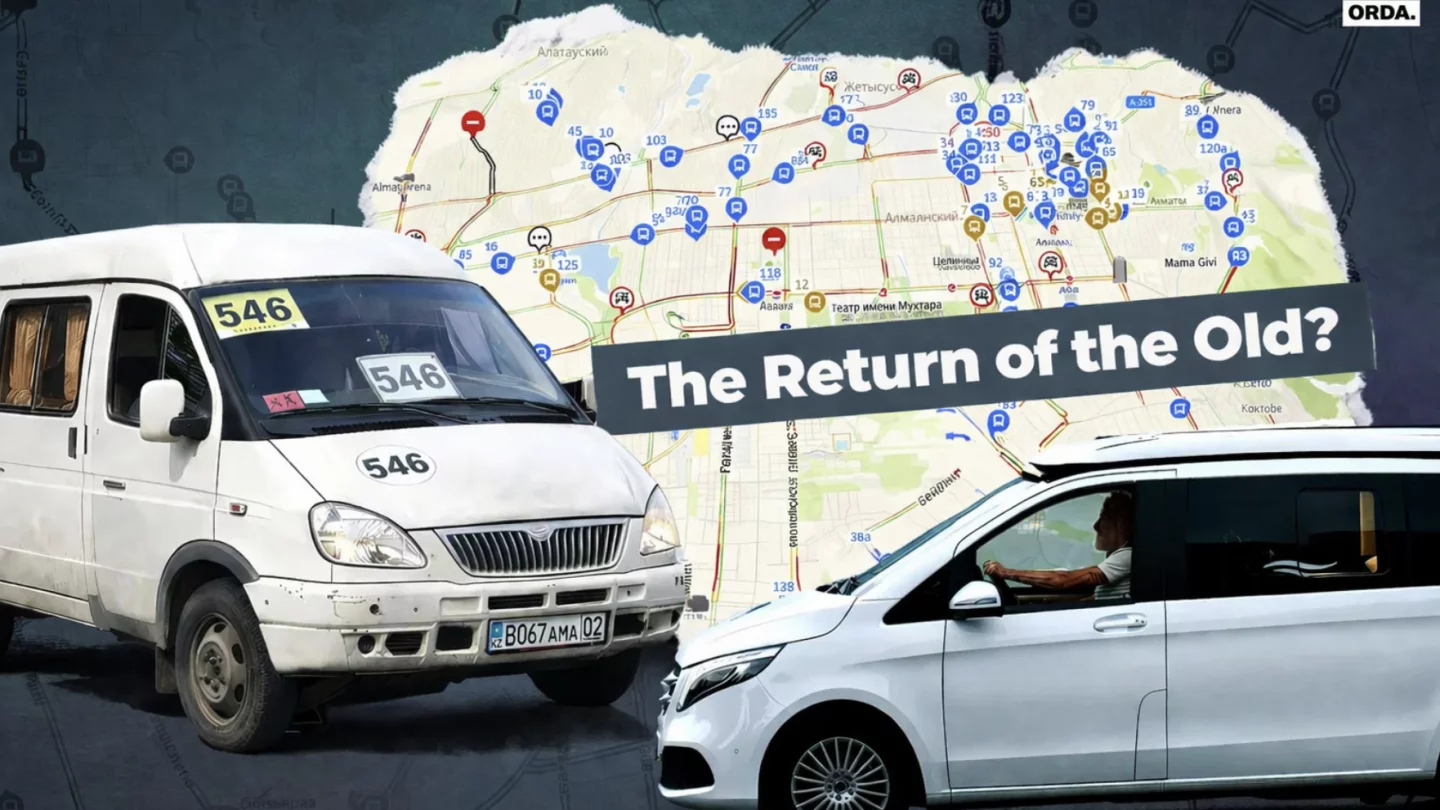 Photo: Orda.kz
Back in the day, marshrutkas were part of public transport in Kazakhstan’s cities. But digitalization, cashless payments, and tighter control became catalysts for their disappearance. Now marshrutkas are returning — only they are called shuttles. Orda.kz looked at whether they can repeat the history of their predecessors and what lies behind this type of transport.
For almost two decades, from roughly the mid-1990s to the early 2010s, marshrutkas played an important role in cities, taking on passenger traffic where urban public transport failed. At one time, this type of transport helped mask, though not intentionally, many problems in the sector. But as a commercial rather than a social service, it did not fit well with the later course of public transport development.
Moreover, the more widespread the marshrutka became, the more visible the flaws in transport relations between the city and passengers became. In the old model, the marshrutka was often largely separated from the urban transport system — in a sense, a parallel structure where drivers competed with city public transport for passengers, operated only to fill seats, and where standards of service and safety depended heavily on the driver.
Where Did the Marshrutkas of the 1990s Go?
In cities that moved toward comprehensive transport reforms, marshrutkas usually became one of the first targets of change. In Almaty, this did not happen in a single year, but according to a fairly typical scenario: through the unification of payment systems, stronger oversight, and standardized requirements for carriers.
As noted in a CPC report, under Imangali Tasmagambetov, Almaty began systematically addressing these problems in 2006. He himself pointed out that large-capacity buses should cover as many city routes as possible.
To date, 500 GAZelles have already been removed from the routes. The task has been set so that large-capacity buses completely displace them. This does not mean that there will be no such type of transport left in the city at all: it is clear that they will still be used by certain companies to transport their employees, but this will no longer be passenger transportation on routes for which the city is responsible.Tasmagambetov said in 2006.
Under Akhmetzhan Yessimov, transport reforms continued in Almaty, and the city began to manage not individual carriers, but the entire route network as a system. In 2011, Yessimov directly stated that public transport optimization should be carried out in stages and take citizens’ opinions into account at the same time.
This agenda already included the principles of minimizing route duplication, organizing trunk and feeder lines, and integrating ground transport with the metro.
But at that time marshrutkas were still operating around the city and interfered with the qualitative development of public transport, which Yessimov also pointed out. Since those years, it became necessary to gradually bring all of this under a single structure and management system.
Under Bauyrzhan Baibek, the focus continued to shift from discussing the route scheme to control, transparency, and quality of transportation. Against the backdrop of the introduction of cashless payment and digital ticketing, the akim at the time directly spoke about the need to bring public transport revenues out of the shadows and criticized some private carriers, calling them a threat to citizens.
As the city gradually moved to unified control, strengthened the role of municipal transport, and renewed the fleet with large and medium-capacity buses, marshrutkas in their old format gradually lost ground. It became increasingly difficult for them to compete with more spacious, standardized buses. A single payment system, tougher safety requirements, and fleet renewal effectively became the final point for that model.
Although private route transportation built into mass urban passenger traffic gradually declined to almost nothing, the small-bus format itself did not disappear. It has always existed, and it has remained on routes where large-format buses could not operate. But first things first.
Well-Forgotten Old
The absence of commercial marshrutkas did not trouble residents too much. But the need for alternative transport remained — when a taxi is expensive, and the bus is still often crowded and does not always arrive at the right time. That is why different forms of sharing began to gain popularity, from transport itself to a seat in it.
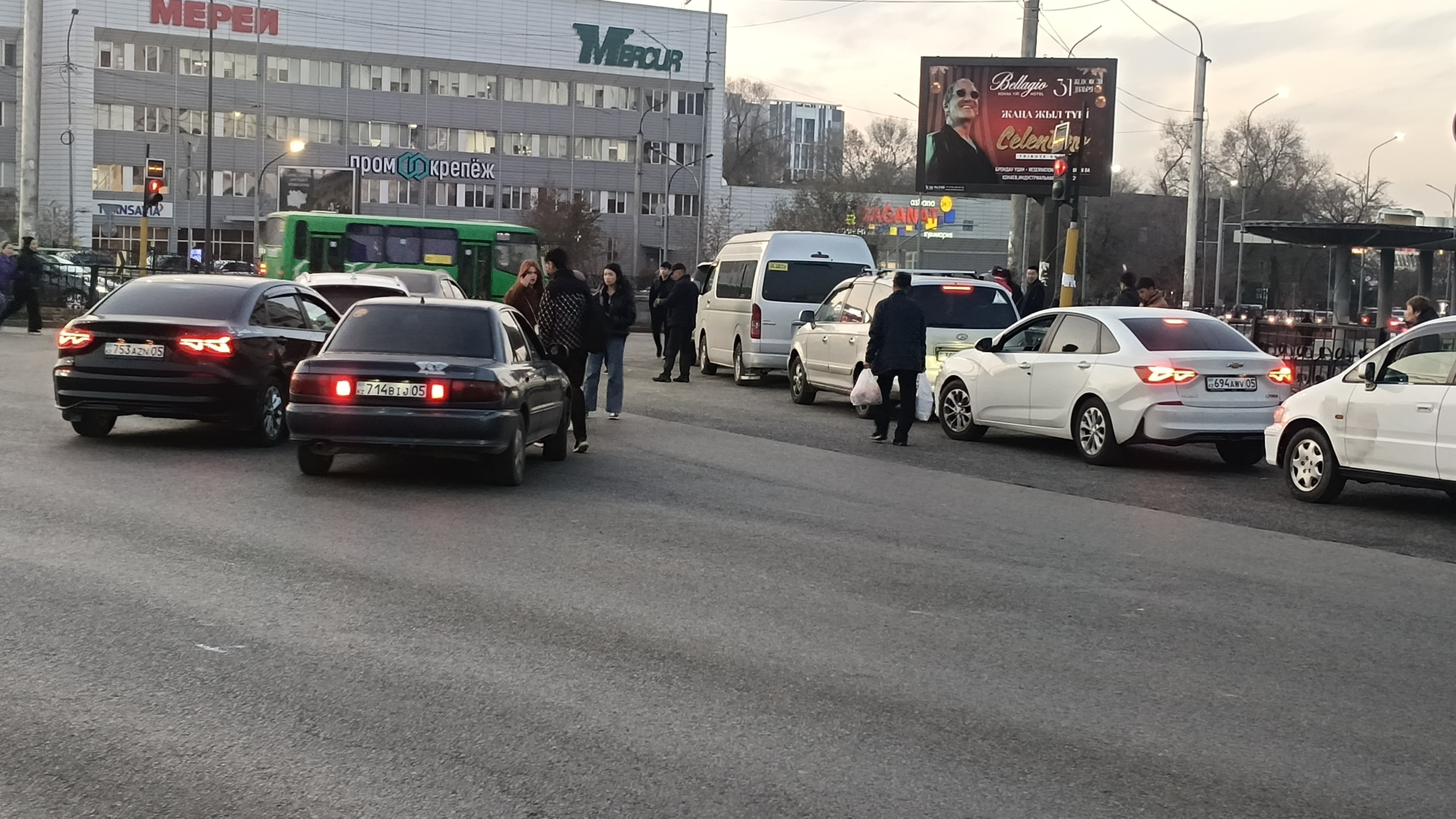
The updated format implies the use of information technology. Today, there is what companies call shuttles. In fact, they sell passengers much the same promise as before — faster and more convenient travel — but according to a modified logic, with clear time slots, rules, and digital control through a smartphone.
However, representatives of one IT startup involved in transportation told us that their company does not like being compared with marshrutkas. One of the main reproaches toward this type of transport has always been that it sometimes ran along the most profitable routes, creating duplication and competition with urban public transport. But that, according to one of the founders, Musa Sekenbayev, is not the case with them.
The basic difference between a shuttle and a marshrutka is that a shuttle is fundamentally a different transport format. First of all, the shuttle provides seats only — there are no standing passengers. Secondly, it does not operate on the principle of a marshrutka, which makes many loops during the day: the shuttle usually makes one or two trips in the morning and two in the evening, that is, it works only during peak hours.he said.
According to him, their shuttles do not need to rush or stop at every stop. They have a fixed route with already confirmed passengers. Another important difference is the price: the shuttle is more expensive than a marshrutka fare, but still much cheaper than a taxi. That is why, Musa says, this format will not suit everyone.
We have the technological ability to understand which routes are in demand among our users. It is not only about the fact that urban mobility can generally be analyzed — where people go in the morning and where they return from — but also about our own internal dаta: we see in which directions passengers who are ready to pay the established shuttle fare want to travel.
Musa Sekenbayev believes their startup offers a useful format for the city and has its own audience. Part of the transport demand is covered by alternative services, which in the future may reduce the amount of subsidies needed. That, in turn, means the city could direct the freed-up money to other important areas. In addition, Musa believes their service, to some extent, helps reduce traffic in the city.
According to the service’s data, the audience now consists of two groups in roughly equal proportions: about 50% are former bus users, and about 50% are people who previously used a taxi or a private car. At the same time, one shuttle can replace at least six to eight private cars or taxis on city roads. The fewer cars in the city, the fewer traffic jams — the logic here is simple.
The more alternative means of transportation residents have, the more convenient the urban environment becomes.
We ourselves choose places in the city where the vehicle can safely stop without interfering with traffic. As a rule, these are pull-in bays, pockets, and other areas where the stop does not block the flow. Such points are chosen by our operational team. If we talk about coordination with the city, it is more accurate to say this: we work within traffic rules and do not violate the established stopping procedures. the startup representative said.
The company stresses that the main responsibility for traffic safety lies with the driver. At the same time, they, as carriers, undertake to build a system of requirements, oversight, and regulations, and in the event of disputes, the support service responds.
Despite all the advantages, commercial shuttles are not an alternative for everyone. These vehicles are still aimed at the mass mobile consumer and are not designed for people with limited mobility.
Right now, we are primarily a startup, so objectively we cannot immediately provide a fully ready and universal product for all categories of passengers. Even large market players are not always able to offer such a solution, especially at an early stage of development. Therefore, we are primarily focused on mobile citizens. But in the future, when the necessary resources and opportunities appear, our task and main mission is to make sure that people can comfortably get from point A to point B, including passengers with disabilities. Musa Sekenbayev said.
The Place of Marshrutkas in Transport Reforms
Egor Muleev, a researcher at the Leibniz Institute for Regional Geography in Germany who studies transport and mobility, also spoke about the phenomenon of shuttles and explained how it looks from the point of view of urban transport development.

Egor Muleev notes that one of the key mistakes in talking about “new marshrutkas” is to automatically treat any small vehicle as a return to the old model. According to the expert, the post-Soviet city has a blurred perception: as soon as a passenger sees a small-capacity vehicle, they immediately interpret it as a marshrutka in the familiar sense — with chaotic stops, competition for passengers, and weak control. But in itself, a small class of transport does not yet mean a marshrutka in the direct sense of the word.
In international practice, a minibus can be part of a normal public transport system simply because in a specific direction or in a specific area, passenger traffic is too low for a large bus. In this case, the issue is decided not by the size of the vehicle, but by the rules: accessibility standards, boarding requirements, comfort level, network integration, and city control. In other words, a small bus can be both part of a modern transport system and its opposite — depending on how it is organized
From this, the expert says, follows a more important conclusion for Almaty, one that became clear during transport reforms.
The problem of the old marshrutka was not so much the vehicle itself as the model in which private carriers competed with each other for the most profitable passengers and in fact shaped transport reality on the streets themselves. Such competition can look effective from a business point of view — more passengers per kilometer, higher load, less empty mileage. But it is precisely from this logic that the old type of marshrutka grows: route duplication, a race for demand, conflict with the urban network, and orientation toward profitable corridors instead of systemwide coverage. That is what urban public transport suffers from. Egor Muleev said.
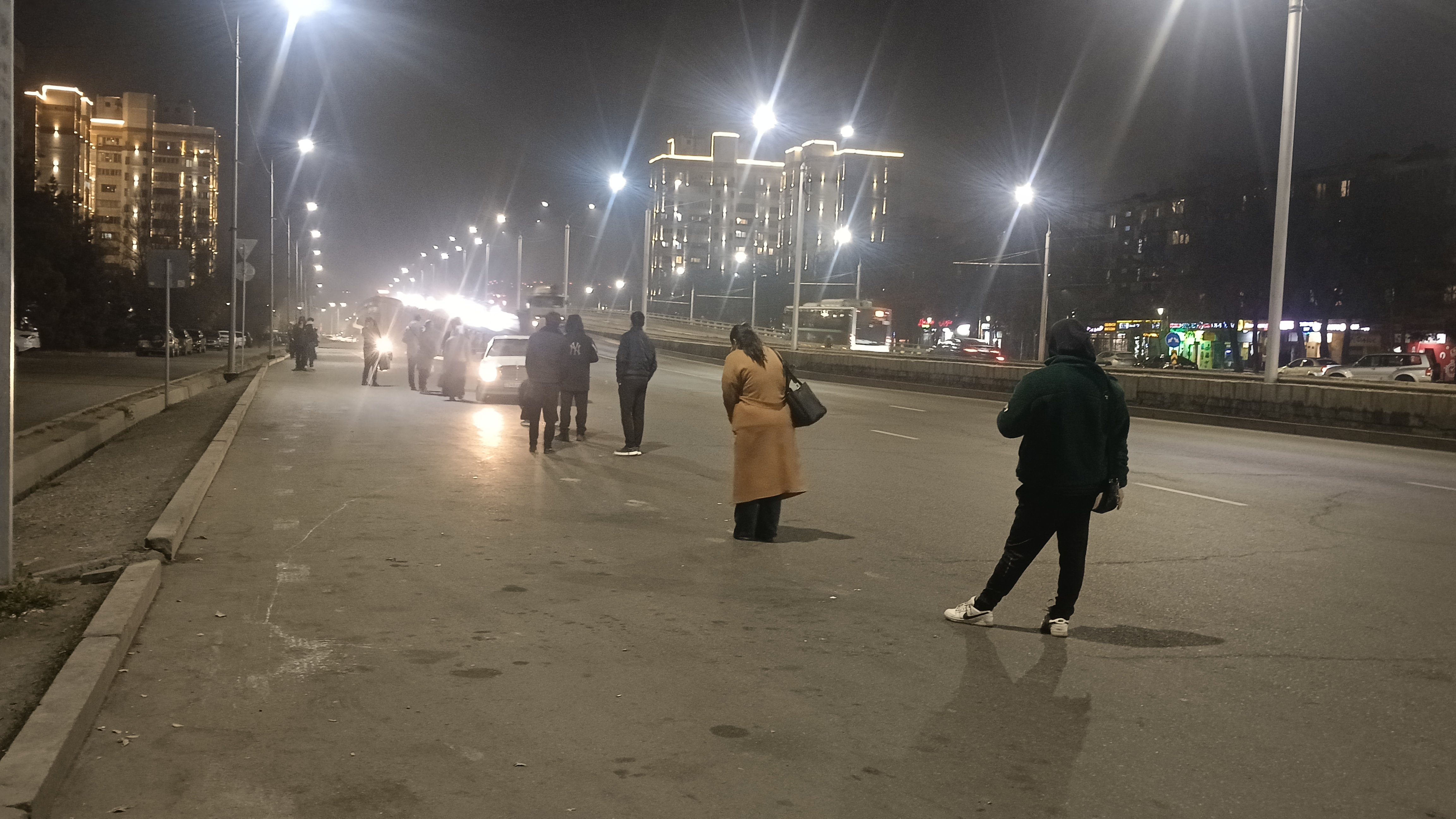
The expert calls the alternative a model in which the city sets the rules in advance: it studies passenger flows, points of attraction, and traffic generation, designs a route network, and through contractual mechanisms determines who transports passengers, where, by what means, and according to which standards. In such a system, the private carrier does not disappear, but ceases to be an independent market actor and becomes an operator of transport work built into the overall architecture of urban mobility.
The expert also emphasizes that a successful service for the user and a useful service for the urban system are not the same thing. It may be convenient, in demand, and commercially viable, while at the same time not reducing congestion, not shifting people away from private cars, and even pulling passengers away from existing public transport. Moreover, in cities with well-developed public transport, such private transportation is often simply not in demand.
There are examples when private carriers try to attract passengers solely through greater comfort in route transport, but in the presence of tram traffic this does not produce the expected effect. Probably that is why such solutions are mainly in demand in the peripheral sections of the transport system. Muleev said.
A separate problem is marketing promises, which are often presented as if they were proven transport effects. In such cases, it is important not to confuse an attractive pitch with actual consequences: a statement that the service will ease pressure on the city or solve the problem of traffic jams proves nothing in itself. That requires verification through data — where the passenger came from, how the corridor load changed, whether network connectivity increased, and whether the number of private car trips fell.
The widespread thesis that a sharing service can replace private cars and public transport is largely based on the results of individual studies conducted, among other places, in the United States in the 2010s. However, broader experience shows that such a conclusion is not universal. This mechanism does not work everywhere and always depends on the specific local context. That is why company statements that their services can solve the problem of traffic jams should be treated with caution: often wishful thinking is presented as reality. the expert noted.
According to Egor Muleev, there are many examples around the world of private carriers working in conjunction with urban public transport, but the key condition is how the system as a whole is arranged and regulated.
In this sense, the conversation about the reinvention of marshrutkas in Kazakhstan is a discussion not only about a new type of service, but also about who should decide how urban transport is organized in general. Where is the line between market innovation and public infrastructure? Who determines the place of such services in the network — the passenger, the carrier, the akimat, the operators? And how can new solutions be built so that they strengthen public transport rather than bring back the old logic of competition on the streets
So far, shuttles are not as popular as marshrutkas once were. They are a niche alternative aimed at specific demand and are not competitors to urban public transport in terms of scale. Given how many passengers they carry, as well as the fact that the city is developing environmentally friendly public transport and monitoring its work, private carriers today are no longer the kind of problem they used to be.
Read also:
Latest news
- Why Kazakhstan Is Restricting Foreign Goods in Public Procurement
- Kazakhstan Has the Lowest Level of Dependence on China in Central Asia
- Noise, Construction and Cameras: What Astana Residents Are Saying About the LRT Tests
- Marshrutka vs. Shuttle: Why Kazakhstan Is Reinventing the Main Public Transport of the 1990s
- Several Border Checkpoints With China to Close for One Day
- Laser Guidance Systems Begin Testing on Kazakhstan’s Highways
- Kazakhstan Plans Mandatory Labeling for Dietary Supplements and Jewelry
- Chinese Influencer Tao Mingxiu Receives Presidential Award in Kazakhstan
- Kazakhstan Ranks Sixth In the World By Agricultural Land Area
- Uzbekistan Breaks Regional Record In Public Debt Market
- “They Are Not Cattle, You Don’t Vaccinate Them”: Why Zoologists Cannot Save Caspian Seals
- Did The Digital Economy Stumble Over PPP? How The Minister Reacted to the IT Industry’s Problems
- Private Investors to Help Build Juvenile Correctional Facilities in Kazakhstan
- “Like Rotten Eggs”: Residents of Atyrau Again Complain About the Stench in the City
- Digital Passport and Admission Benefits: Kazakhstan Wants to Change Volunteering
- Infected Sunflower Seeds From the U.S. Barred From Entering Kazakhstan
- Almaty Drivers Offered Free Emissions Checks Without Penalties
- Croatia Will Finance Oil Exploration In Aktobe Region
- Half of Kazakhstanis Earn Less Than $1,000 a Month
- Is The Era Of Easy Extraction Over? Resource Development Is Being Rebuilt In Kazakhstan
