

Kazakhstan: Orda Talks with Experts on Proposal for New Independent Prison Agency
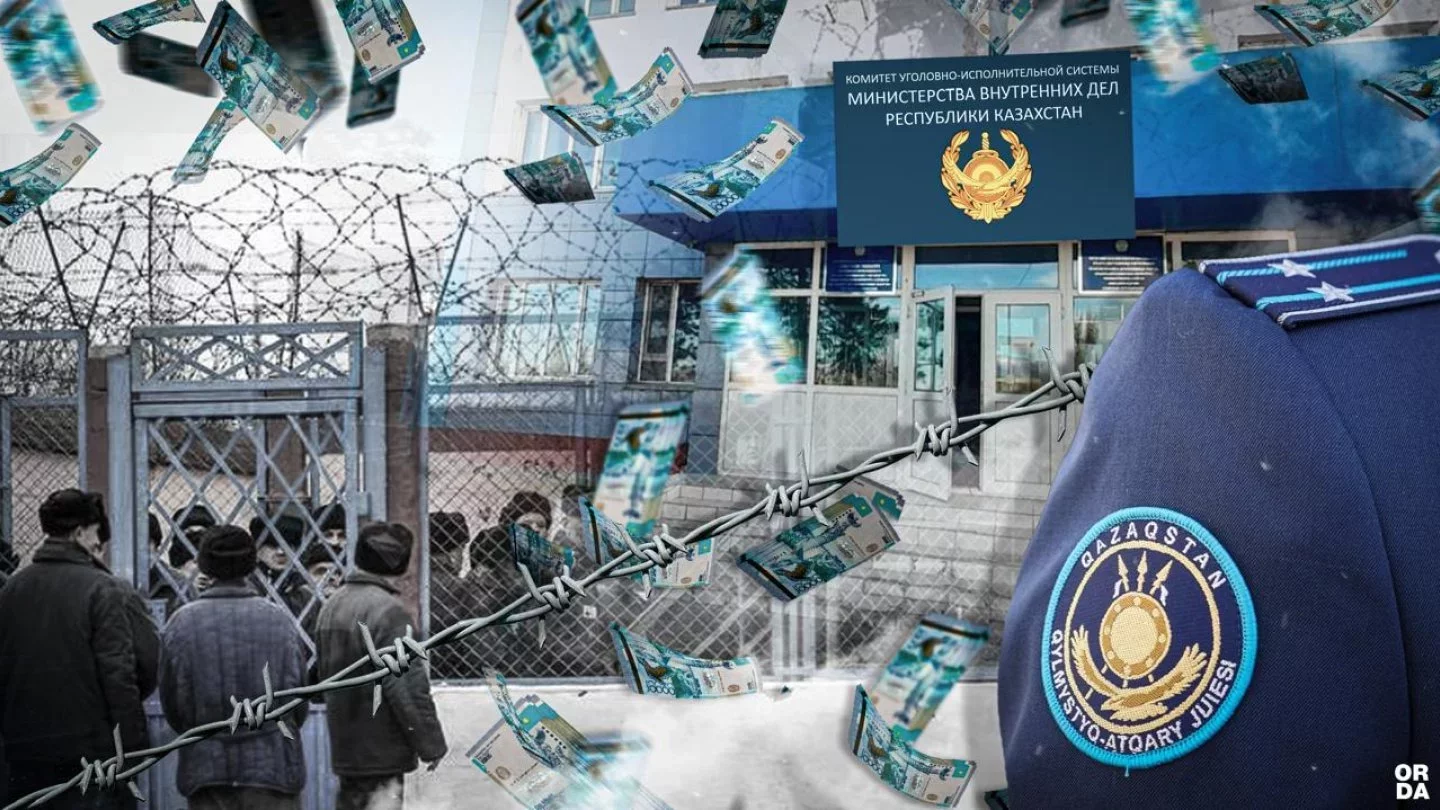 Photo: Orda.kz
President Toqayev has said that prisons in Kazakhstan should focus on helping people improve, not just isolating them. Human rights activist Zhainagul Torekul has proposed creating a new agency for this purpose, which would focus on rehabilitating incarcerated persons. Orda.kz learned the details.
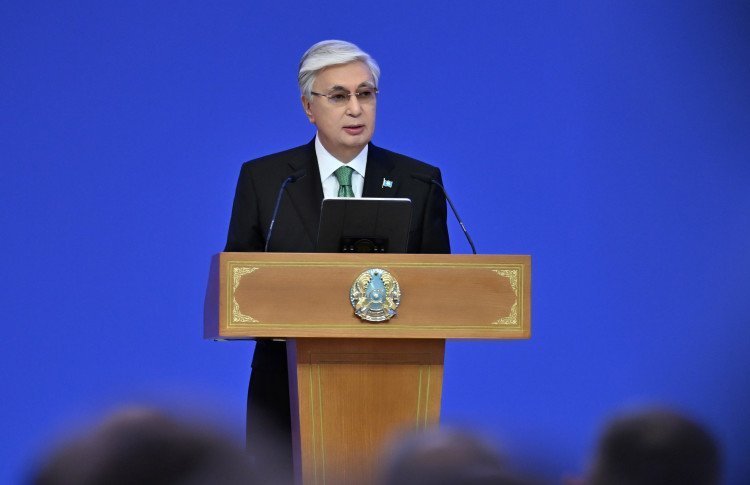
On June 23, 2025, a meeting of the expanded board of law enforcement agencies was held in Astana with the participation of President Toqayev. Addressing participants, the head of state outlined the key priorities in their work that will help build a fair and safe Kazakhstan. One of these priorities is improving the penal system (PS).
Today, there is a pressing need for serious reform of the PS. It should be aimed at re-educating incarcerated persons, not just isolating them from society, Toqayev said.
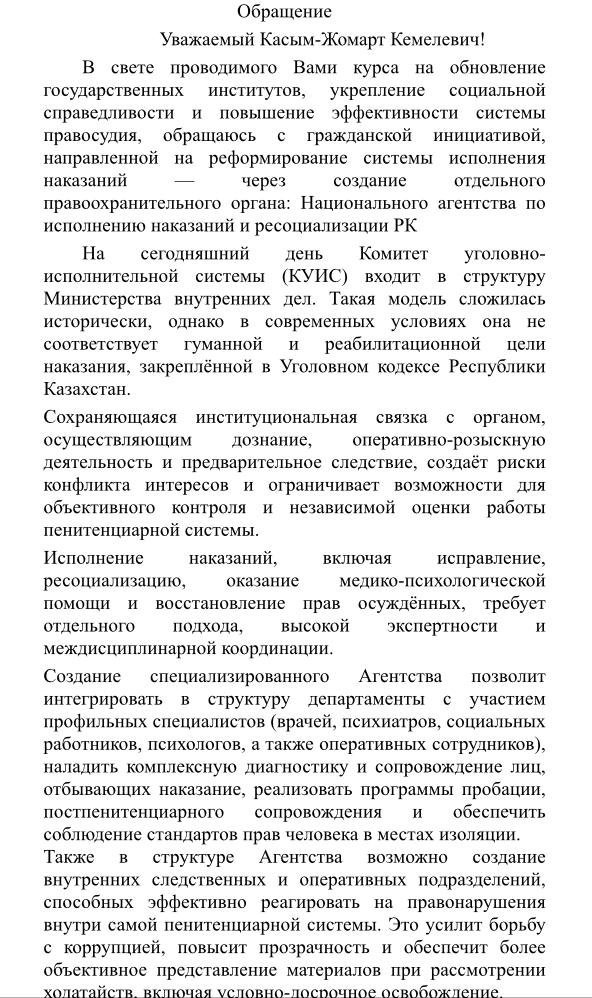
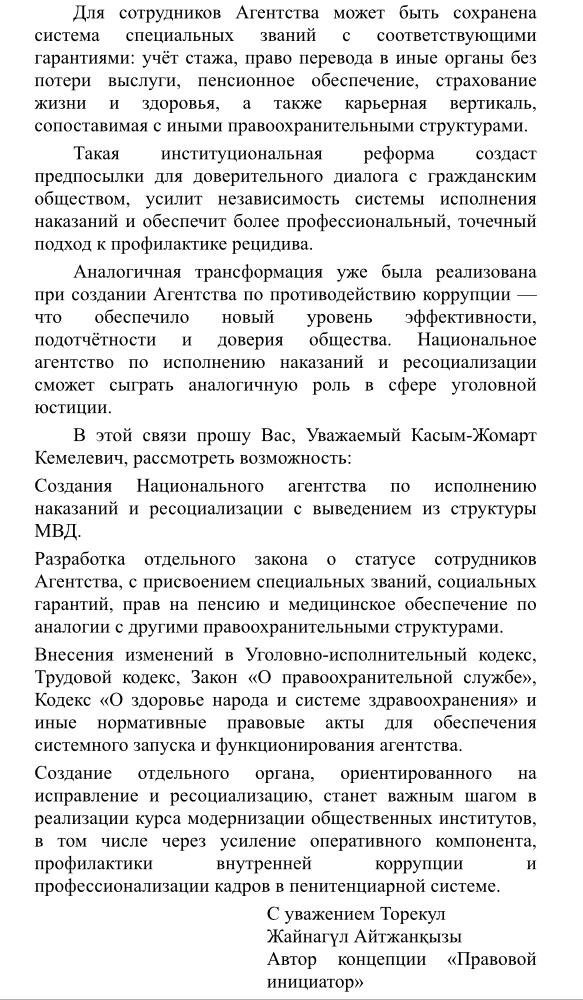
The president’s message was echoed by Astana human rights activist and lawyer Zhainagul Torekul, who has 30 years of experience. She proposes reforming the Committee of the Penal System (KUIS), removing it from the Ministry of Internal Affairs, and making it an independent enforcement agency focusing on rehabilitating incarcerated persons.
Humanity Above All!
O: Zhainagul, please explain — why is it necessary to transfer the prison system from one law enforcement agency to another? Why can’t KUIS remain within the Ministry of Internal Affairs?
Zh: Such a model does not match the humane and rehabilitative purpose of punishment enshrined in our Criminal Code. Right now, the police bring a person to criminal responsibility, isolate them from society for a time, restrict them in every way — and then are supposed to “correct” them. These are completely different concepts with different purposes. I see a conflict here.
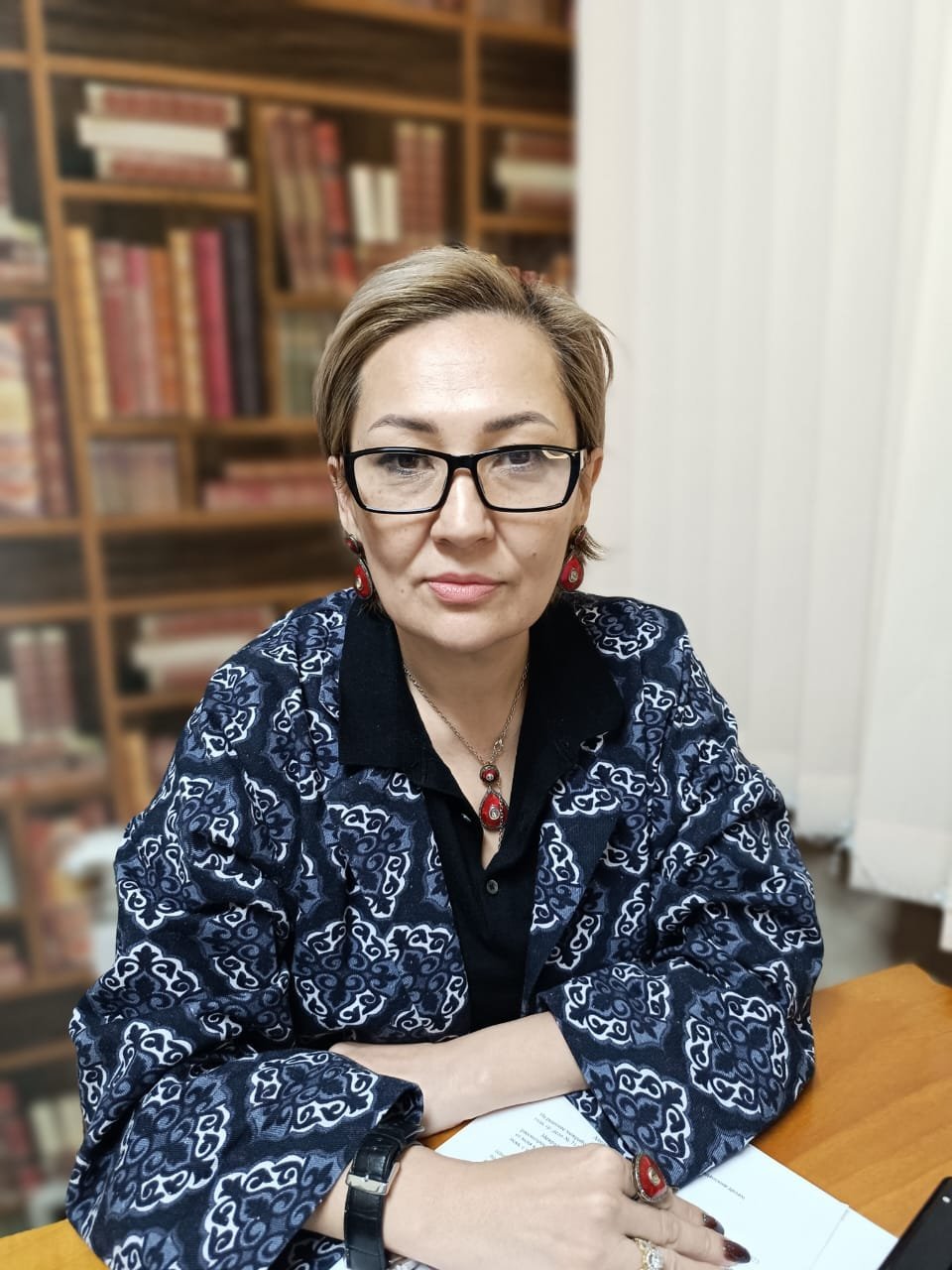
That’s why I propose easing the Ministry of Internal Affairs’ workload so the police can focus solely on crime prevention and enforcement. We need to create a new agency whose staff will strictly observe human rights standards in places of detention. I made this point in my address to the head of state.
O: If the new agency were subordinate to the ombudsman, perhaps the new uniformed officers would uphold human rights. But it is often easier to guard criminals and punish the most defiant than to rehabilitate them. So how do you plan to change the situation?
Zh: I propose integrating into the new agency’s structure specialized staff — social workers, doctors, psychologists, and psychiatrists — who can help convicts get on the path to rehabilitation and, after release, reintegrate smoothly into society.
We must leave behind three centuries of punitive practices based on retribution and intimidation. The goal should be humane punishment, with a focus on meaningful work and respect for the law. We must always remember: an incarcerated person is an individual who can — and should — benefit society.
O: Who could head the new agency, and to whom would they report?
Zh: The agency could be led by a chair, as with Antikor. As for oversight, I believe they should report directly to the president.
O: As a taxpayer, I’m interested in the financial side. Have you calculated how much creating a new law enforcement agency would cost the state?
Zh: I’m not an economist or financier who handles project budgets and accounting. I’m the legal initiator of the “Azamattyk” civil platform and a lawyer — my focus is on different matters.
But understand this: if we don’t propose a new penal system model now, one oriented toward international standards and human-centeredness, it will be very difficult to achieve the president’s vision of a fair and safe Kazakhstan in the coming years. Funding the old model is just patching holes — not solving the problem. The new agency should have its own budget, independent from other ministries. Direct funding will allow flexible distribution of funds for penitentiary needs and resocialization programs.
O: Are you basing this proposed new penal system model on your human rights work?
Zh: Yes — on both personal experience and international best practices in convict rehabilitation and resocialization. By the way, many domestic lawyers and human rights activists support me.
O: Do you know how much it currently costs the state to keep one prisoner per year?
Zh: About three million tenge. For comparison, the state spends an average of 400,000 tenge per year on a schoolchild. The numbers speak for themselves — one convict costs the budget as much as eight students. It’s time to rethink this so that there is real value in maintaining prisoners.
O: Presumably, the probation service of the Ministry of Internal Affairs would be transferred to it. And who would handle the medical care and employment of convicts — still the Ministry of Health and the RSE “Yenbek”?
Zh: I believe the Ministry of Labor, in cooperation with the Atameken National Chamber of Entrepreneurs, could take on the issue of employing convicts. Why do we even need an RSE? In his speech, the president called on businesspeople to open various industries within correctional facilities. Such mutually beneficial partnerships are common abroad. The income earned would allow convicts to get back on their feet after release, and the skills acquired would help them find decent jobs.
As for medical care, this should be handled by the new agency’s own medical service — not the Ministry of Health, since my observations show they still cannot find common ground with the Committee of the Penal System.
Take, for example, the escorting of sick convicts: because someone failed to submit an escort request on time, many prisoners do not receive medical care promptly. As a result, they suffer, sometimes become disabled, or even die — and no one is held accountable.
O: In your opinion, is it necessary to build new colonies and prisons in Kazakhstan now?
Zh: This issue must be approached carefully. But I do believe it is necessary to build new, modern penitentiary institutions that meet international standards for humane detention conditions. This would not only reduce the strain on existing facilities but also optimize costs.
Consider this: according to the Penal System Committee of the Ministry of Internal Affairs, as of January 1, 2025, there were 41,150 convicts against a system capacity of 39,443. This means the penitentiary system is already operating at its limits. These numbers aren’t just statistics — they directly reflect unbearable detention conditions, constant tension, and a threat to stability within the system.
Today, the average occupancy rate in the Penal System is 96%, but this figure hides serious local problems. For example, Medium-Security Facility No. 14 in Zarechny, Almaty Region, holds 1,025 inmates despite a capacity of 850. Even worse is Medium-Security Facility No. 8 in Aqtobe, where capacity has been exceeded by 135.8%.
Similar overcrowding exists in Facility No. 31 in Dolinka, Qaraganda Region (116.4%), Facility No. 17 in Oskemen (117.2%), Facility No. 15 in Atyrau (123.4%), and Pre-Trial Detention Center No. 72 in Almaty (109%).
O: Where would new employees be recruited from, and how could they be motivated to serve honestly and conscientiously?
Zh: I think it would be best to recruit from among retired officers of the Penal System, similar to how the Ministry of Defense operates. We should also train our own personnel, with higher education in pedagogy or law being highly desirable. To minimize corruption risks, new employees must be paid a fair salary.
It is important to preserve their special ranks, preferential service length, life and health insurance, and the ability to transfer to other law enforcement agencies without losing their years of service.
O: Who would oversee them and investigate any crimes they commit?
Zh: Oversight should remain with special prosecutors. The internal departments of the new agency could effectively respond to offenses within the prison system itself, similar to the internal security units in other agencies.
O: The creation and implementation of a new agency will require amendments to existing legislation. Have you already considered what new laws need to be adopted or which current laws should be amended?
Zh: I believe we need a separate law on the status of employees of the new agency, as well as amendments to the Criminal Executive Code, the Law on Law Enforcement Service, the Code on Public Health and the Healthcare System, and the Labor Code. It’s worth the effort!
A Civilian Agency
KUIS has already undergone reorganization. In 2002, it was removed from the Ministry of Internal Affairs and transferred to the Ministry of Justice. Then, in 2011, it was returned to the Ministry of Internal Affairs.
We searched the archives and found an article from the Vremya newspaper dated August 2, 2011, which reported on the return of the prison system to the police department. The comments in that article were given by Zhemis Turmagambetova, Executive Director of the public foundation Charter on Human Rights.
Like Zhainagul Torekul, she advocated for creating an independent prison department. Below are excerpts from her interview with our colleague.
When KUIS was transferred to the Ministry of Justice in 2002, it was seen by all democratic countries as a major step forward in legal reform. It is considered better for the penitentiary system to be under a civilian ministry rather than a law enforcement body. The KUIS should have a civilian status, not be a military or police organization. And the Ministry of Internal Affairs is, after all, a security agency.
We, as human rights activists, were against the KUIS being part of the Ministry of Internal Affairs because an operative, investigator, or inquiry officer can enter a pretrial detention center at any time and carry out investigative actions, interrogations, and so on, Turmagambetova explained.
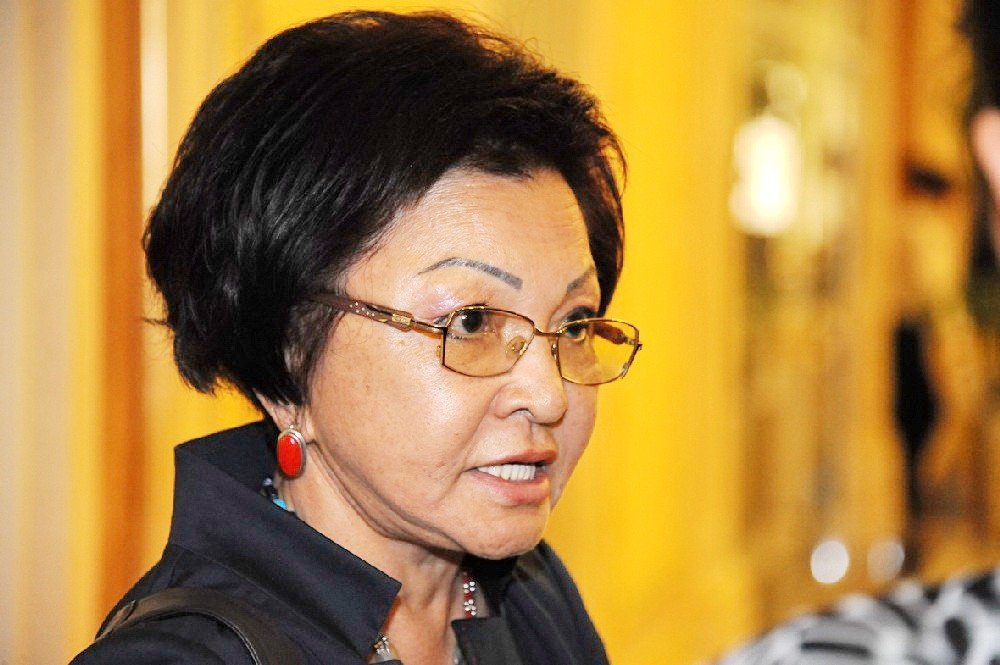
According to the human rights activist, she and her colleagues had proposed creating a new penal agency — but unlike Torekul, she saw it under the government:
We proposed at the time to remove the penal system from the subordination of any ministry and make it a separate agency under the government, with its own budget so that no one could interfere. After all, significant funds are allocated to maintain the penitentiary system. I believe the KUIS should report only to the minister, and the chair of the KUIS should also hold the position of vice minister — combining the two roles, as is done in many countries, said the head of the foundation.
At the end of the conversation, she shared her thoughts on why the KUIS was moved back from the Ministry of Justice to the Ministry of Internal Affairs:
It started with a personnel shake-up. Former Ministers of Justice allowed sudden changes in KUIS leadership, sometimes appointing completely incompetent people as chairmen who stayed in the position only for a few months. It’s unclear what they actually did there. None of this led to anything good. The KUIS was transferred to the Ministry of Internal Affairs in response to recent events in correctional facilities — escapes, riots, explosions… The Ministry of Justice failed to handle the task assigned to it.
A New Agency Is Not Needed
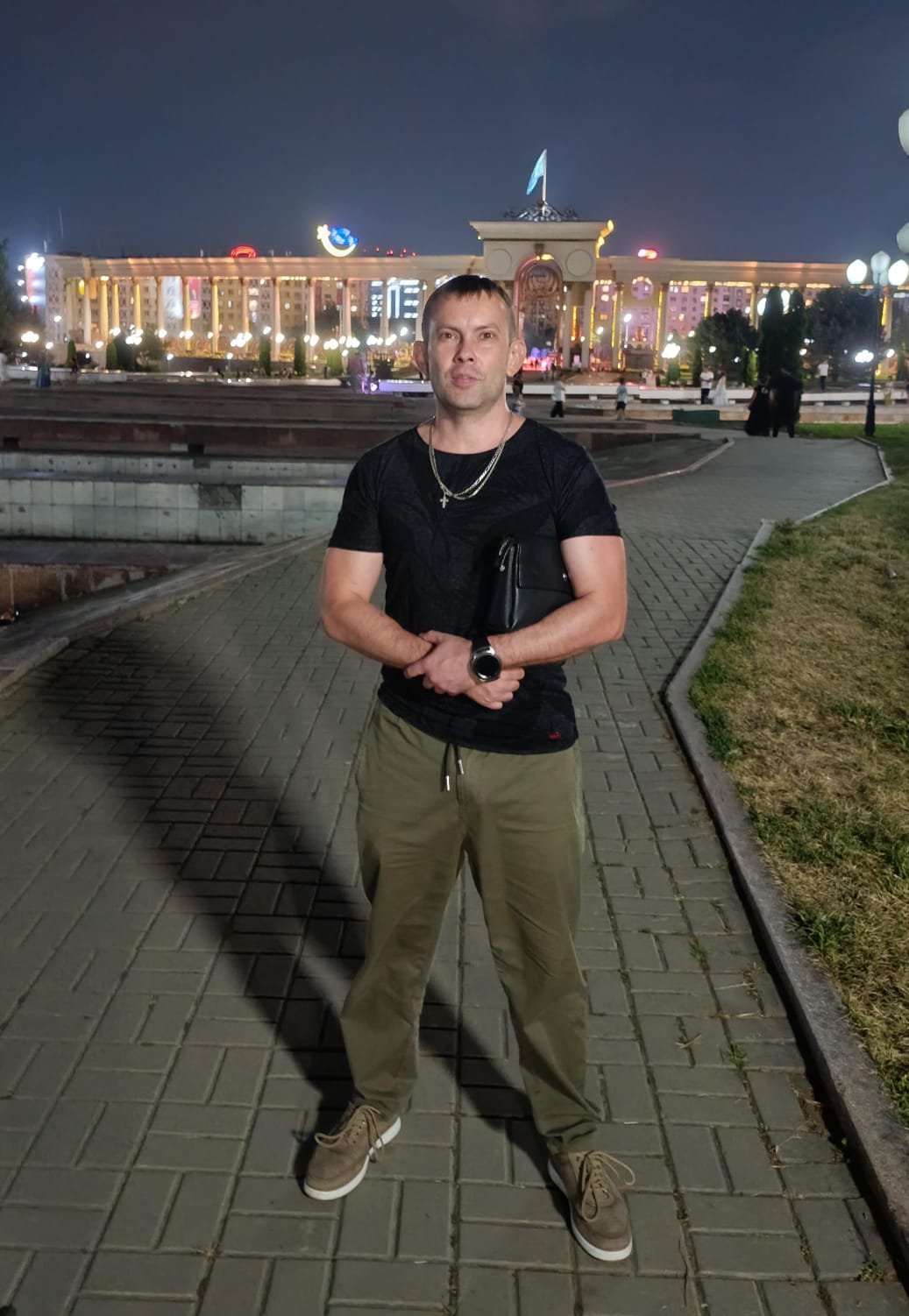
We spoke with Andrey Usikov, a former inmate of Zarechny Facility No. 57 in the Almaty Region. He was released in mid-July 2025 and now works in his profession while also engaging in social work. Andrey is a member of the NGO "For Justice," whichi is helping incarcerated persons.
O: Do you think Kazakhstan should now create such an agency?
A: It makes no sense to create a separate state body. It would essentially perform the same functions as the current KUIS under the Ministry of Internal Affairs. The budget would not be able to handle the extra burden, since the new law enforcement agency would require significant funding to operate.
I believe that money would be better spent on implementing social programs for vulnerable groups or plugging the financial gaps in the current KUIS. The issues of correction and punishment are certainly important to society, but not to the extent that we should create a new body, especially one that would report directly to the president.
At present, only two agencies have that privilege: the Prosecutor General’s Office and the National Security Committee. There’s no need for a third.
O: The capital’s human rights activist proposes creating operational and investigative units within the new agency to respond promptly to violations committed by prison staff. Do you support this idea?
A: No, I do not. I think it would be more effective to create a new Investigative Committee, modeled after the Russian Investigative Committee or the former Kazakh State Investigative Committee. Only in that case will criminal cases be less likely to be closed on dubious grounds, and the majority of cases will make it to court.
O: Andrey, you served a sentence for the sale of large quantities of psychotropic substances. You have never admitted your guilt, yet you were released on parole after amendments were made to Article 297 of the Criminal Code in January 2025. Do you believe you reformed during your time in prison?
A: I was illegally convicted under Part 3 of Article 297 of the Criminal Code of the Republic of Kazakhstan because I have never been involved in selling psychotropic substances. I am not a criminal. Accordingly, I did not need “re-education” behind bars. I believe that until a convicted person himself wants to reform, no one will reform him.
O: How do you assess the work of prison staff? Does the KUIS system need to change?
A: In my opinion, the professional training of most KUIS employees leaves much to be desired because they still operate in the old way. They simply guard prisoners and make their lives in the colony as difficult as possible.
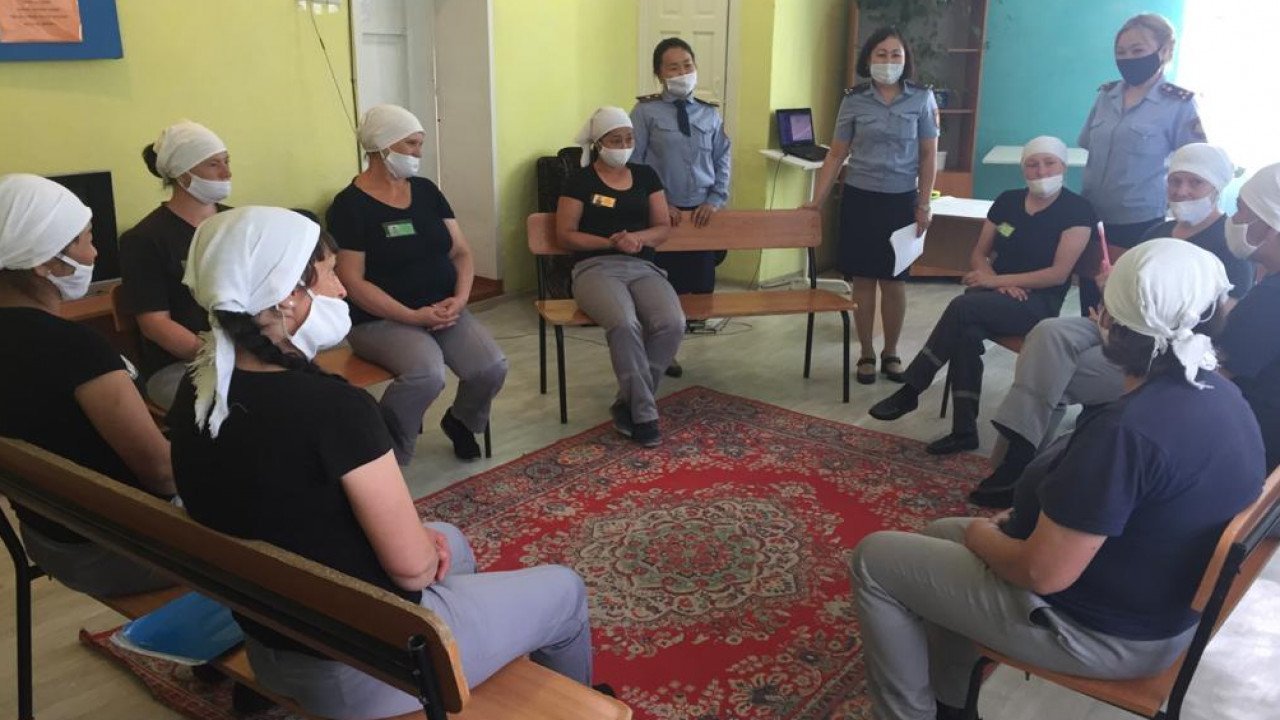
What we need is to strengthen the work of psychological and educational services within KUIS. Psychologists should not just be formally listed on the colony’s staff — they should actually focus on social adaptation and resocialization of prisoners.
They need to instill in inmates the understanding that life outside the criminal world is far better, more interesting, and safer than life inside it.
O: What should motivate one to change?
A: He must understand that by living a normal, law-abiding life — not stealing or selling drugs — he can earn a decent income. The problem is that there are not enough jobs in the camps. Incarcerated persons are idle, frustrated, and unable to financially support their families or fully compensate the harm caused to victims.
The latter is a mandatory condition for parole; if an inmate fails to meet it, he delays his own release. That’s why it would be great if more entrepreneurs set up production facilities in the industrial zones of colonies. That would mean new jobs!
O: Currently, the RSE “Yenbek” handles such employment. How do you rate its performance?
A: In my opinion, RSE “Yenbek” is one of the most corrupt organizations in the country, operating on a planned-loss basis and profiting nationwide. Remember the high-profile corruption cases involving its regional branches — the media wrote plenty about them.
I know from firsthand experience: to open a business inside a colony, an entrepreneur on the outside has to pay money to RSE “Yenbek.” Then he pays for renting the premises, and for a prisoner to get a job there, he also has to pay someone.
O: When you were in the general-regime colony in Zarechny, did you have everything you needed — food, treatment, clothing, a warm place?
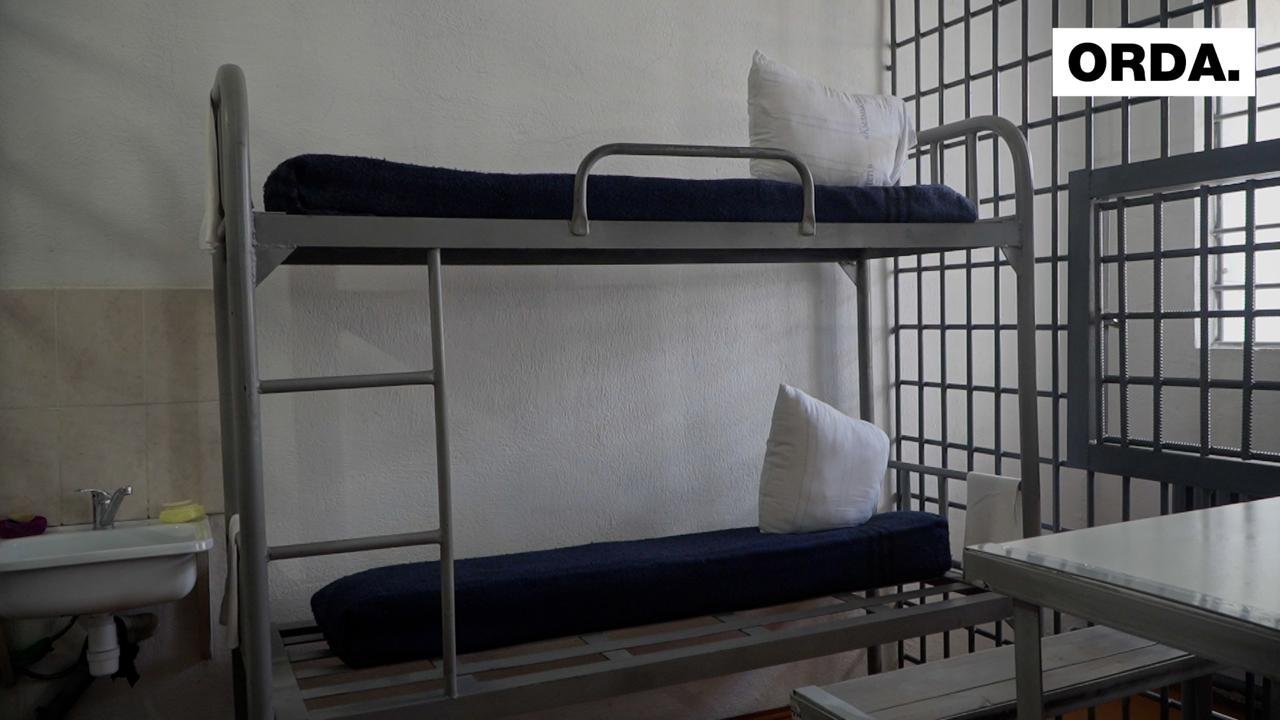
A: It’s hard for me to answer directly because, formally, I received what I was entitled to. In reality, I lived on what my relatives sent me and what I bought myself. As for warmth and other “camp comforts,” my observation is that upkeep in recent years has been mainly at the incarcerated persons’ own expense. I’m talking about repairs to living quarters, cultural clubs, and gyms. It’s hard to find a barrack in any colony today that doesn’t have a leaky roof.
Go to Shemonaikha, Taraz, Zhangiz, Shymkent, or Qyzylorda and see the condition of the barracks there. In the Almaty Region, we don’t have big problems with maintenance — we’re a wealthy region.
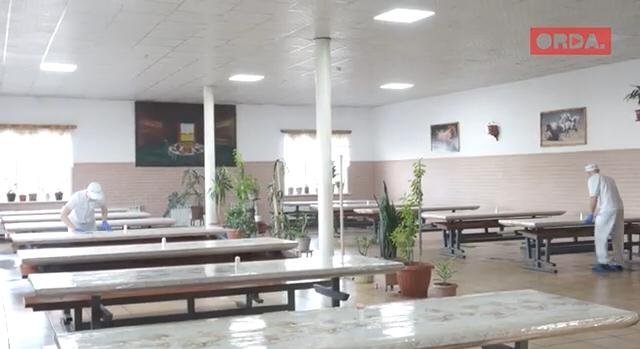
O: In 2023, the Minister of Internal Affairs approved food and supply standards for incarcerated persons. The list included fruit, juice, dried fruit, jam, fresh fish, cheese, and ground coffee. Did you get all that in the canteen?
A: I remember we got apples, but all the other so-called “delicacies” on that list are news to me. Maybe diabetics or patients in the medical unit received them, but not us, the regular prisoners. RSE “Yenbek” has a division responsible for organizing prisoners’ meals, but the quality of supplies is poor.
Even if a product is on the standards list, it’s often missing and replaced with something else. I think KUIS should monitor the quality of supplies — especially meat — but I haven’t seen much evidence of that. One hand washes the other, I guess.
O: In the last two years, there has been a clear trend of convicting former prison “bosses” on corruption charges. Why do you think so many bribe-takers in uniform are suddenly being jailed?
A: I attribute this to the increased activity of officers in the fifth departments of regional National Security Committees, who fight corruption and organized crime at the local level. I commend them for bringing criminal cases to completion — not only conducting operational surveillance of suspected prison heads but also catching them red-handed.
Committee investigators gather substantial evidence for the prosecution, which leads the courts to find the defendants guilty and hand down appropriate sentences.
According to insider information, after the Anti-Corruption Service was reorganized, its former employees are being polygraphed in order to remain in the National Security Committee. If the new anti-corruption service within the NSC works effectively, I believe order will be restored in many government agencies.
A Different Take
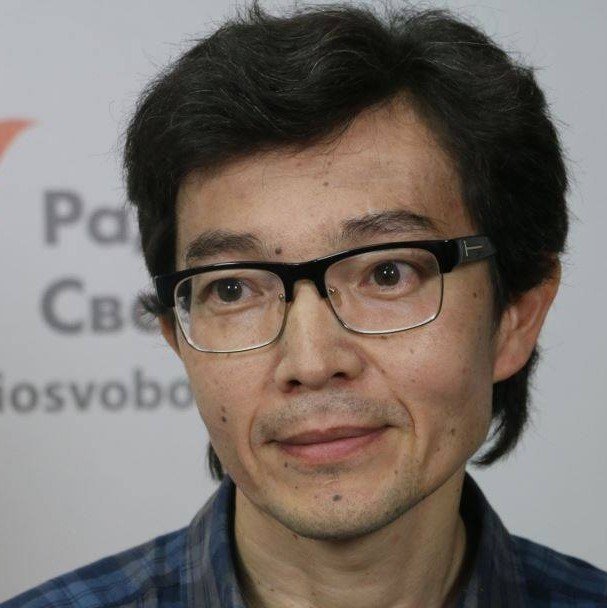
The head of the public foundation Liberty, Galym Ageleuov, has long been involved in reforming Kazakhstan’s penal system. Having seen both the pros and cons of the KUIS reorganizations in the 2000s, he speaks on this topic with his trademark frankness.
O: Why do you think the KUIS was transferred to the Ministry of Justice in 2002, only to be returned to the Ministry of Internal Affairs in 2011?
G: It was done to establish public oversight. Before that, it was a case of one hand washing the other: the Ministry of Internal Affairs both punished criminals and protected them, setting its own rules. Many crimes were simply closed and never reached court.
When the KUIS moved to the Ministry of Justice, there were minor improvements, but no systemic change. That reorganization should have been completed properly, at least by appointing people genuinely committed to reform.
That didn’t happen, likely because of corruption. Officials seemed more interested in the funding of penitentiary institutions than in rehabilitating inmates. As a result, corruption and torture remained unchanged.
O: In your view, should the penitentiary system be under a law enforcement agency or a civilian agency?
G: It should be under a civilian agency that truly respects civil rights and freedoms. There must be order in the penal system, and it should be jointly overseen by human rights defenders and officials who understand human rights.
I suggest following the example of Norway, Sweden, and Finland, where prisons are always open to visits from human rights and public activists.
O: In Kazakhstan, are colonies closed to human rights activists?
G: At best, we human rights activists visit colonies once a year, so there’s no question of systemic oversight. If visits were unannounced, without notifying the administration, and we could bring our phones inside, that would be another matter.
Ideally, all facilities would have continuous video monitoring, and the leadership would listen to us — then we could talk about truly effective work. But as it is, by the time we visit, all shortcomings have been patched up and conditions improved just for show.
O: When that happens, do you seek help from the human rights ombudsman to facilitate unannounced inspections and free communication with inmates?
G: I believe our ombudsman has no influence on the situation. He distances himself and often sides with officials — the same goes for prosecutors, for example.
O: How do you rate the work of special prosecutors overseeing law and order in colonies?
G: I’d rate their efficiency at zero. Special prosecutors are rarely in their assigned offices inside the colonies. If an incarcerated person complains about a rights violation, they don’t investigate — they just file away the complaint with a formal reply.
O: Do you think raising guards’ salaries and improving their benefits would reduce corruption risks and improve their legal awareness?
G: What’s the point of raising salaries if many of them don’t even follow Kazakhstan’s own laws, let alone international human rights standards? We need effective measures to ensure they themselves don’t commit violations.
There should be no hazing or drill. Guards must continually improve their skills, show sensitivity and understanding toward inmates, and ideally have higher pedagogical education. Only then can they help rehabilitate offenders so they can return to society without difficulty.
O: Do you support lawyer Torekul’s proposal to create a new penal agency?
G: I find it hard to answer. I need to know exactly what it would be, who would run it, who it would report to, and what powers its staff would have. If there’s nothing fundamentally new to set it apart from the current KUIS under the Ministry of Internal Affairs, then I see no point in reforming it; otherwise, it would just mean additional expenses.
Original Author: Zhanar Kusanova
Latest news
- A Russian Teen Who Crossed Into Kazakhstan on Foot Wins Appeal Against Expulsion
- Regional Revenues, Global Instability, And The Referendum: What Tokayev Told Deputies
- Digitalization Of Customs Or New Barriers? What Entrepreneurs Fear In Kazakhstan’s New KEDEN System
- Astana Could Become An International Aviation Leasing Hub
- Kazakhstan’s First Tagged Eurasian Black Vulture Found Dead in India
- Kazakhstan Replaces Russian Turbines With Chinese Equipment for Ekibastuz Power Plant No. 2
- How Kazakhstan, Uzbekistan, And Azerbaijan Will Export Electricity To Europe
- Kazakhstan Explains How Russians Who Fled Mobilization Can Be Deported
- Kazakhstan and Japan discuss hydrogen partnership with export potential
- Russia Thanks Tokayev for Initiative to Support Russian Language
- Almaty Could Restrict Cars Under Beijing-Style Anti-Smog Plan
- Tigers in Kazakhstan Are in No Rush to Breed
- What Changes Are Being Prepared Under the New Tax Code
- Alcohol and Tobacco Prices in Kazakhstan See Sharpest Monthly Rise in 15 Years — Analysts
- Middle East Conflict Will Not Lead to Higher Gasoline Prices in Kazakhstan — Minister
- Five Regions of Kazakhstan Face Higher Flood Risk This Spring
- Kazakhstan Ratifies Turkic States Civil Protection Deal
- Astana Enters Top 100 Safest Cities as Smart City Project Expands
- Almaty Cameras to Record New Driver Violations Starting March 12
- Kazakhstan Suspended 11 Polling Stations Abroad Due to Middle East Escalation
