

President Signs Amnesty Law, Urges AI Use in Crime Prevention
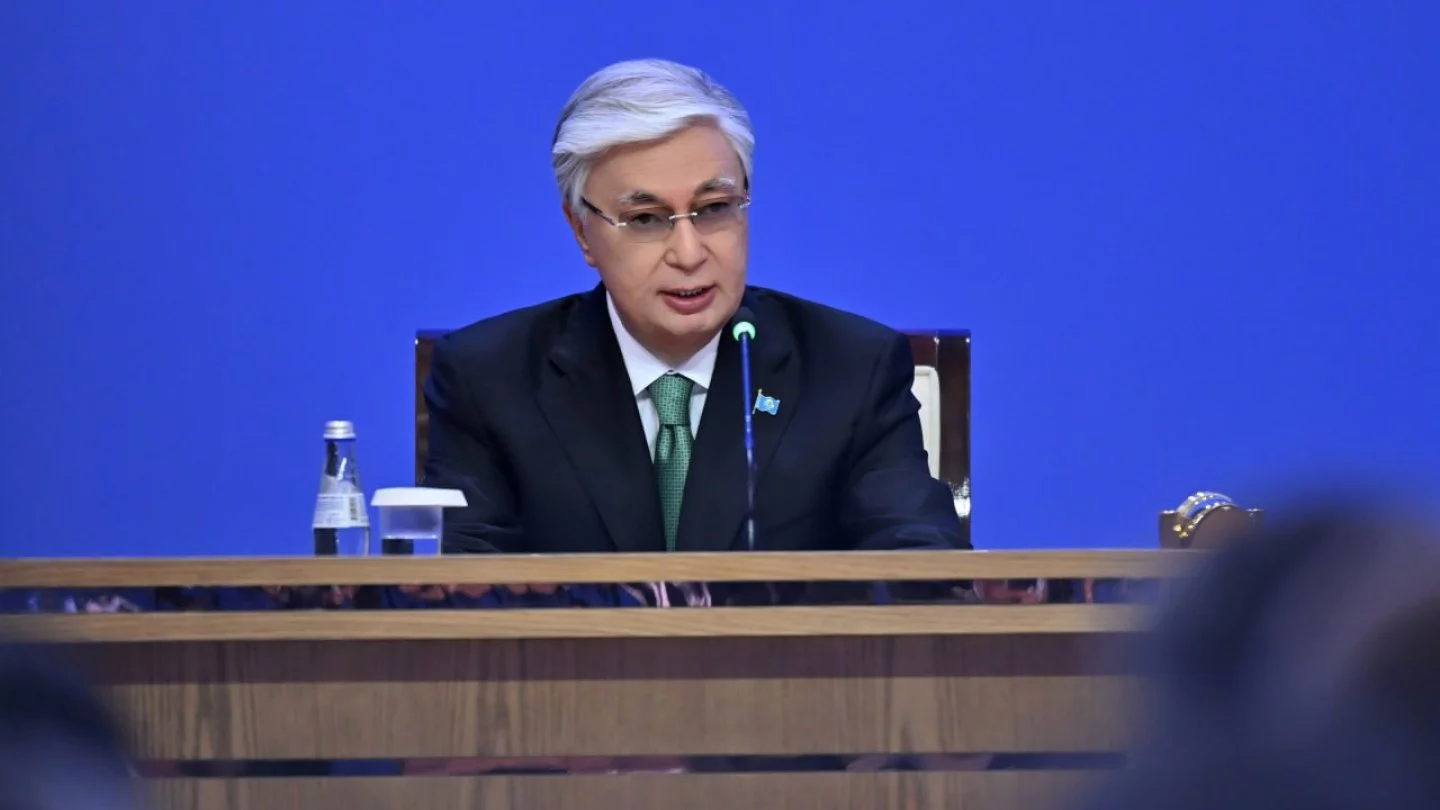 Photo: Aqorda
President Qasym-Jomart Toqayev addressed an expanded meeting of Kazakhstan’s law enforcement agencies, stressing the importance of public safety amid growing geopolitical tensions, Orda.kz reports.
Toqayev noted that since 2019, the number of criminal offenses in the country has been cut nearly in half, and safety in public spaces has improved by 80 percent.
Still, he emphasized that the work is far from complete. One of the government's top priorities remains tackling domestic violence.
One year ago, a law [the 'Saltanat Law'] significantly tightened penalties for domestic violence. Thanks to the adopted amendments and other measures, since the beginning of 2025 the number of medium and high-severity crimes in the domestic sphere has decreased by 30%,
Toqayev stated.
Corruption was another key focus. The President noted that funds confiscated from oligarchs and corrupt officials are being redirected toward public infrastructure projects. As evidence, he pointed to the recent opening of Kazakhstan’s first social facility built using returned assets.
Artificial intelligence also featured prominently in Toqayev’s address. He called for the launch of a surveillance platform with capabilities for facial recognition, vehicle tracking, and behavioral analysis.
We need a reboot of our system for forecasting and countering criminal threats. It is necessary to use the capabilities of artificial intelligence and 'big data.' For this purpose, we can use our new supercomputer, which is currently being prepared for launch.
In closing, Toqayev announced that he had signed the law "On Amnesty in Connection with the 30th Anniversary of the Constitution of the Republic of Kazakhstan."
It must be understood that amnesty is a one-time decision, not a systemic measure. Today, there is an urgent need for serious reform of the penal system. It must be aimed at the rehabilitation of convicted persons, not just their isolation from society.
Overall, the President concluded, Kazakhstan’s law enforcement system requires further reform — an agenda the government will now undertake.
Latest news
- Damaged Baikonur Launch Pad Facility Restored After 2025 Collapse
- A Rare Black Melanist Wolf Was Shot in Eastern Kazakhstan
- Kazakhstan Maintains Neutral Stance on Middle East Escalation
- Kazakh MFA: Citizens Evacuated from the Middle East via Oman and Saudi Arabia
- Kazakhstan to Spend 4.6 Trillion Tenge on Road Projects Through 2029
- Central Asia Competes for the Skies: Why Kazakhstan Risks Falling Behind Uzbekistan on Jet Fuel
- The War in Iran Opens a Window of Opportunity for Kazakhstan’s Oil Sector, Analysts Say
- Iran Conflict Escalates Beyond the Gulf: What Kazakh Experts Say About Risks for Central Asia and Kazakhstan
- Kazakhstan Prepares Possible Evacuation of Its Citizens From Iran
- LRT in Astana Is Reaching the Finish Line: The Launch Is Expected in the Coming Months
- Kazakhstan Ready to Help the UAE Amid Escalation in the Region
- Tokayev Discusses Middle East Escalation With Qatar’s Emir
- Airlines Ready to Bring Kazakhstanis Home From the Middle East
- Tokayev Sends Support Messages to Gulf Leaders Amid Regional Escalation
- Kazakhstan Bans Its Airlines From Flying Over Several Middle East Countries
- Astana Strengthens Security Measures Amid Escalation Around Iran
- Tokayev Meets U.S. Ambassador Stufft, Discusses Board of Peace Cooperation
- Mangystau Launches AI-Assisted School Monitoring to Prevent Teen Suicidal Behavior
- Kazakhstan to Supply UK With Critical Minerals
- AI Faculties for Educators to Open in Kazakhstan: What Other Changes Are Coming to the Education Sector
