

Kazakhstan’s Energy Future: An Energy Expert on Kazakhstan’s Power Challenges
 Photo: DALL-E
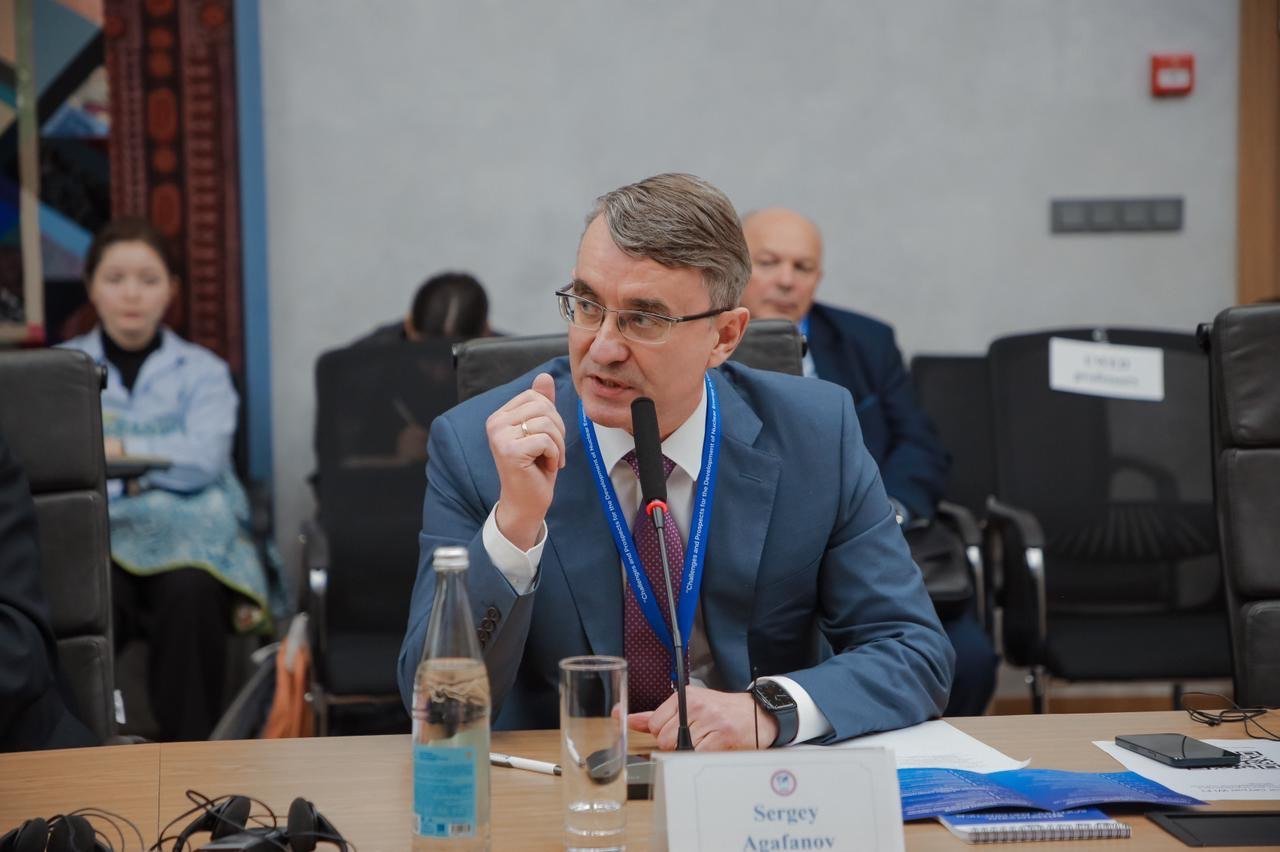
Our recent article on small hydroelectric power plants in Kazakhstan sparked discussion among energy professionals. Sergey Agafonov, Head of the Kazakhstan Association of Energy Supply Organizations, shared his insights with Orda.kz.
In this interview, he discussed why Kazakhstan still needs small hydropower plants, whether our national energy system is stable, and whether we risk facing large-scale problems like the recent blackout in Spain.
O: Small hydropower plants seem to be sidelined in Kazakhstan’s renewable energy sector. Why do you think that is?
S: First, let’s talk about classification. Large hydroelectric stations can’t really be considered environmentally neutral or “green,” due to the flooding they cause, their impact on ecosystems, and aquatic life. So, where do we draw the line on eco-friendliness? I believe our current standard — defining small hydro as up to 10 MW — is quite fair.
The European Union also uses a 10 MW threshold, and in some countries it’s even lower — around 2 MW.
Referring to Soviet-era classifications is outdated; those categorized hydropower plants as “small” not for their environmental impact, but for other technical reasons.
O: Assuming that today’s small hydro plants are indeed eco-friendly, what do they offer our energy sector? What’s their real value?
S: Small hydro is one form of what’s called distributed generation. Back in the USSR, these plants were nearly the only source of both small-scale and “green” energy. Solar and wind farms simply didn’t exist back then. The benefits of distributed generation — whether hydro, solar, or wind — are well-known: it reduces losses, improves the reliability of power supply, and balances generation with consumption on a local scale.
Now, as the world moves into a new energy era, where renewables will inevitably dominate the mix, one more benefit of distributed generation becomes especially important: increased system stability.
O: But how stable can a power system based primarily on renewables be?
S: Grid stability refers to a power system’s ability to continue normal operation despite various disturbances, like malfunctions, for instance. In future systems, where renewables might account for half or more of total output, a new type of risk to stability could emerge: sudden, unpredictable, short-term fluctuations in the output of renewable plants, especially when many of them are concentrated in one area.
O: So, having many wind turbines or solar farms in one place is a bad idea?
S: If you cluster too many renewable plants together — say, a large number of wind farms on a coastal strip — then a sudden weather change, like a sea breeze, can lead to a rapid spike in electricity generation. In fact, strong winds can have a synergistic effect: they may also clear the skies, leading to a surge in solar power output.
Given another technological feature of renewable energy generation, the lack of inertia, these abrupt changes can shift the grid’s frequency, which is one of the key indicators of grid stability.
O: Recently, Spain, Portugal, and southern France experienced a massive blackout. Some blamed renewables. Do you think it’s the same issue you’re describing?
S: Yes, most likely. In Spain, renewables already make up nearly 60% of electricity generation. And these impacts can happen in seconds, faster than I can answer this question. A breeze picks up, renewables flood the grid with power, frequency jumps, automatic systems kick in to shed excess load (including nuclear and gas stations), and then the breeze dies down, and suddenly, the system is left with a shortfall. Spanish media reported a 15 GW drop in output in just five seconds. That’s 60% of national consumption!
Side note from Orda.kz - Other experts have stated the blackout underscores the importance of upgrading grid infrastructure and implementing advanced management systems to accommodate the growing share of renewable energy, rather than indicating a fundamental flaw in renewables themselves.
O: But can’t electricity be stored? Why didn’t Spain rely on storage systems?
S: Well, first of all, Spain's power grid has relatively limited energy storage capacity. And second, such events can occur when storage systems are already fully charged, say, between the morning “half-peak” and the evening consumption peak. In Spain’s case, the incident happened right around midday.
O: So, could Kazakhstan face a “Spanish-style blackout” in the future? How can we avoid this?
S: Alongside building large renewable power plants, we must also invest in distributed generation. That means equipping small and medium-sized businesses, as well as private homes spread across the country, with small-scale “green” energy sources. Simply put, we need to consistently “balance out” large-scale renewable generation with distributed energy production.
As for Spain, experts were already warning in 2024 that the country was neglecting distributed solar generation. There, it made up less than 5% of total solar output, while in the rest of Europe, the figure is 62%. Kazakhstan would do well to take that lesson to heart.
O: And what’s the status of distributed generation in Kazakhstan?
S: Unfortunately, it hasn’t taken off yet, despite legislative changes adopted last year. But the issue isn’t with the regulations themselves — they’re actually quite favorable for so-called net consumers. The real problem is that small businesses and households simply can’t afford the upfront costs.
Compared to a country like Spain, Kazakhstan is just beginning its technological shift toward a new energy system. Today, only 6% of our electricity comes from renewables, so for now we’re unlikely to face the kind of instability Spain experienced.
Still, we can’t afford to be complacent: the government’s recent decision to build three major wind farms, each with a capacity of one gigawatt, is a clear sign that we must begin developing distributed renewable generation in earnest.
O: Let’s go back to small hydropower — what’s the problem, and who’s responsible?
S: The core issue is the absence of a clear development strategy for the sector. But I wouldn’t be quick to blame regulators. The small hydropower community itself hasn’t articulated a cohesive plan.
Calling for incentives alone isn’t enough, especially with the current strain on the single buyer in the energy market, whose tariff has already jumped 50% by April 2025 compared to last year.
As for what needs to be done, small hydro should be developed as a core component of Kazakhstan’s distributed renewable energy generation.
Original Author: Nikita Drobny
Latest news
- Nauryz Celebrations In Almaty To Last Nearly 10 Days
- Kazakhstanis Were Fined for Online Polls on the New Constitution
- 217 New Schools Built In Kazakhstan Over Three Years
- Erbol Khamitov Brings Kazakhstan Gold At The 2026 Paralympics
- Why Are Kazakhstanis Leaving Southern Regions In Large Numbers?
- Tokayev Criticizes Banks For Delaying QR Payments
- Kazakhstan Launches New Preferential Loans For Livestock Breeders
- Rare New Guinea Monitor Lizards Arrive At Almaty Zoo
- Malaysian Automaker Proton Eyes Kazakhstan Production With Allur
- A Russian Teen Who Crossed Into Kazakhstan on Foot Wins Appeal Against Expulsion
- Regional Revenues, Global Instability, And The Referendum: What Tokayev Told Deputies
- Digitalization Of Customs Or New Barriers? What Entrepreneurs Fear In Kazakhstan’s New KEDEN System
- Astana Could Become An International Aviation Leasing Hub
- Kazakhstan’s First Tagged Eurasian Black Vulture Found Dead in India
- Kazakhstan Replaces Russian Turbines With Chinese Equipment for Ekibastuz Power Plant No. 2
- How Kazakhstan, Uzbekistan, And Azerbaijan Will Export Electricity To Europe
- Kazakhstan Explains How Russians Who Fled Mobilization Can Be Deported
- Kazakhstan and Japan discuss hydrogen partnership with export potential
- Russia Thanks Tokayev for Initiative to Support Russian Language
- Almaty Could Restrict Cars Under Beijing-Style Anti-Smog Plan
