

Abay Captivates Italian Philologist, Inspiring Article in European Magazine
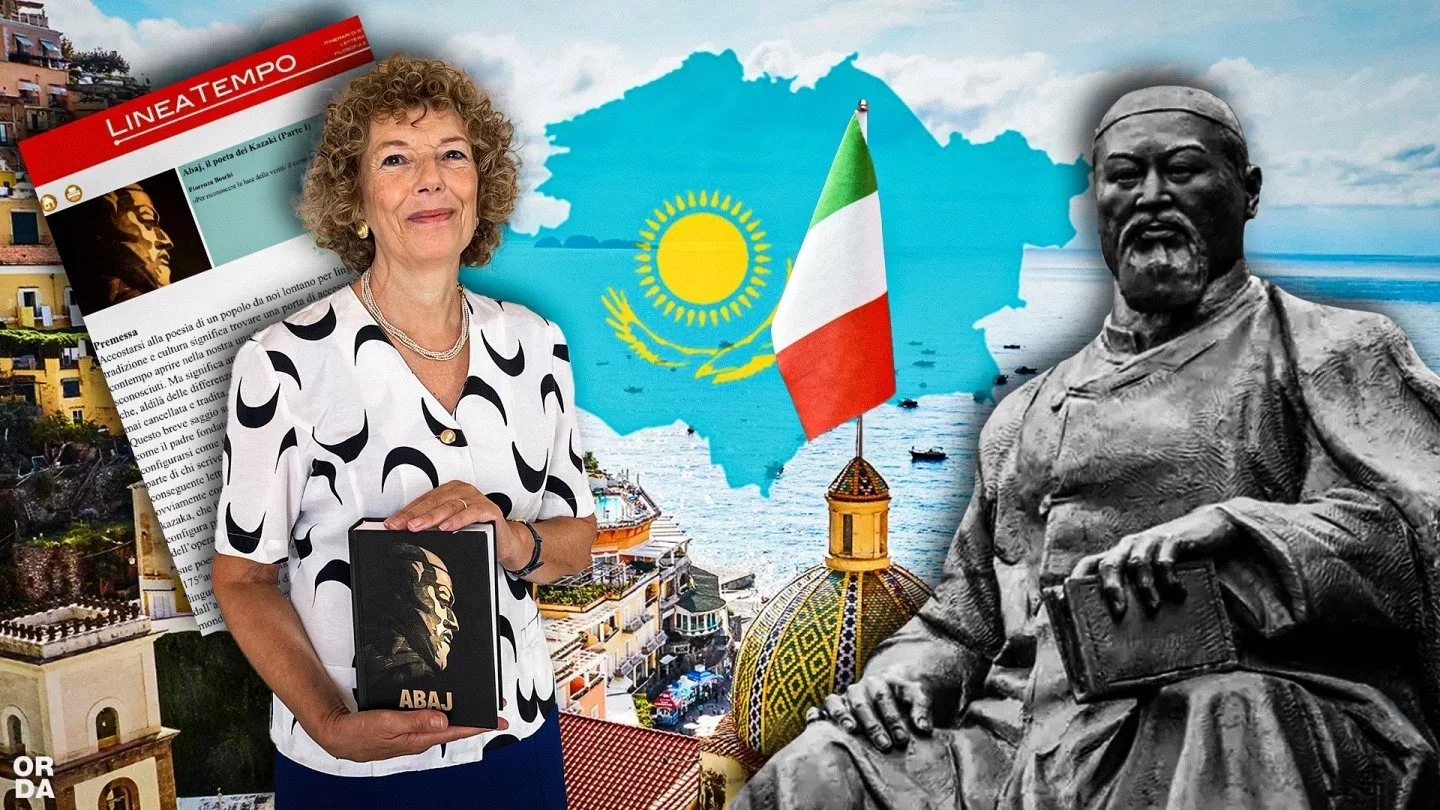 Photo: Orda.kz
In 2020, before the pandemic swept the globe, Kazakhstan launched a major project to translate the works of Abay Kunanbayev into ten foreign languages. The initiative, marking the poet’s 175th anniversary and supported by President Toqayev, produced an unexpected outcome: a collection of Abay’s poetry and biography in Italian found its way to Fiorenza Boschi — a Milan-based philologist, Dante scholar, and expert in Italian literature.
An Orda.kz correspondent spoke with her about the discovery.
From Dante to Abay
Until recently, Fiorenza knew almost nothing about Kazakh literature, apart from knowing that Abay is considered its founder. That changed when her Kazakh daughter-in-law gifted her a book of his poems.
I started reading it with great interest,Boschi recalls.
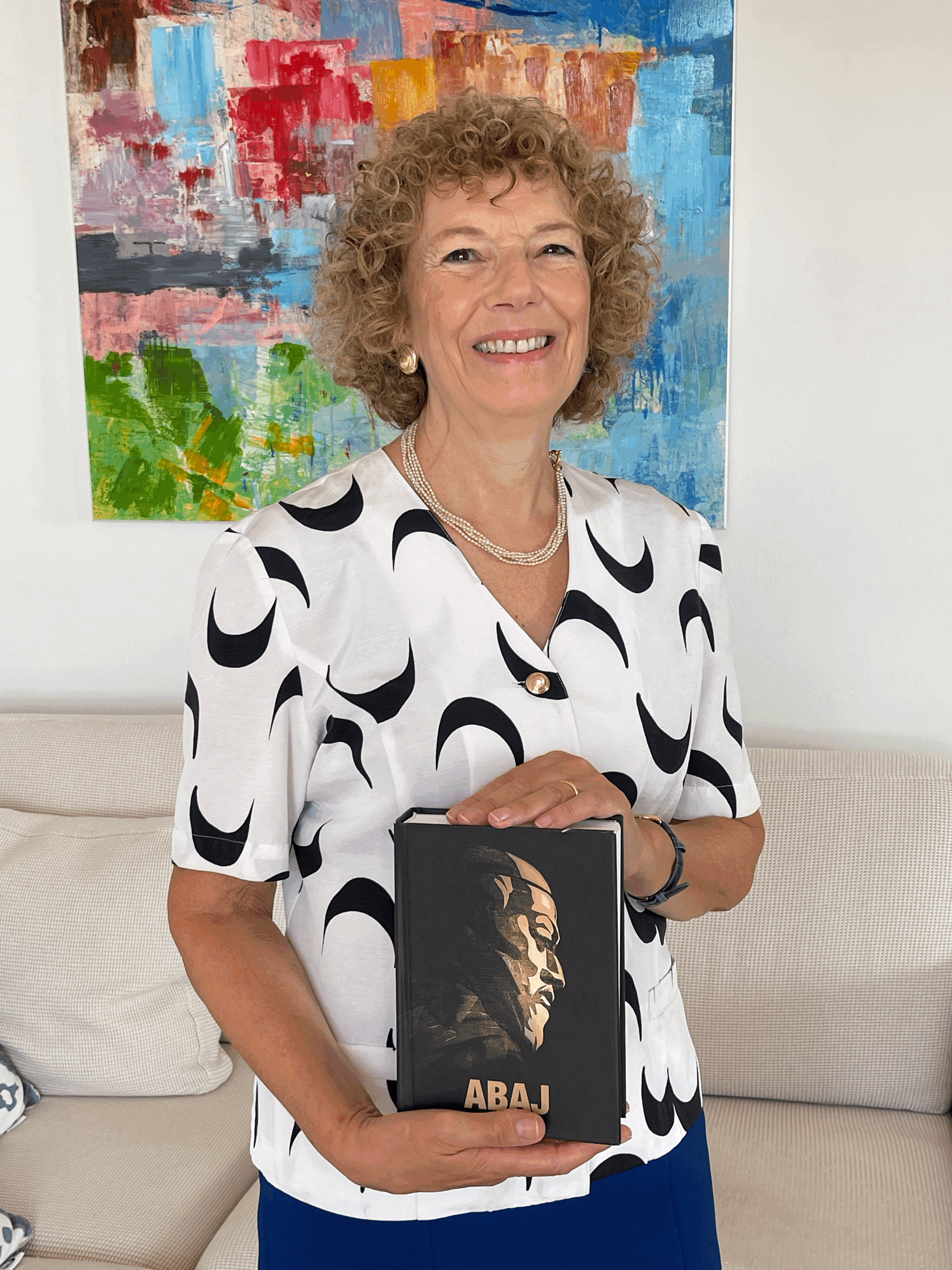
Because she does not speak Kazakh, she read Abay in translation — but even this, she says, was enough to grasp the depth of his philosophy.
Unfortunately, I don’t know Kazakh, so I read Abay’s poems in Italian. It’s clear that when poetry is translated, much is inevitably lost — rhyme, assonance, alliteration, etymological nuances, as well as its sound, rhythm, and layers of meaning. Yet if a poet is truly great, even in translation you can still feel the depth of their inner world and grasp the essence of their message,says Fiorenza.

Fiorenza admits that information about Abay in Italian is almost nonexistent. She turned to English-language sources and Russian texts, which friends helped her translate.
“I Was Deeply Touched”
I was deeply touched by Abay’s poetry, so closely tied to the history and culture of his people. His verses reveal the soul of the Kazakh nation and speak to people across time and place — they have a universal meaning.
Believing Abay belongs among the greats of world literature, she mentioned him to an editor at the cultural magazine Linea Tempo, who suggested she write an article to introduce his work to Italian readers.
This year, Fiorenza published a two-part piece in Linea Tempo. The first installment appeared in spring; the second will be released this August, coinciding with Abay’s 180th birthday.
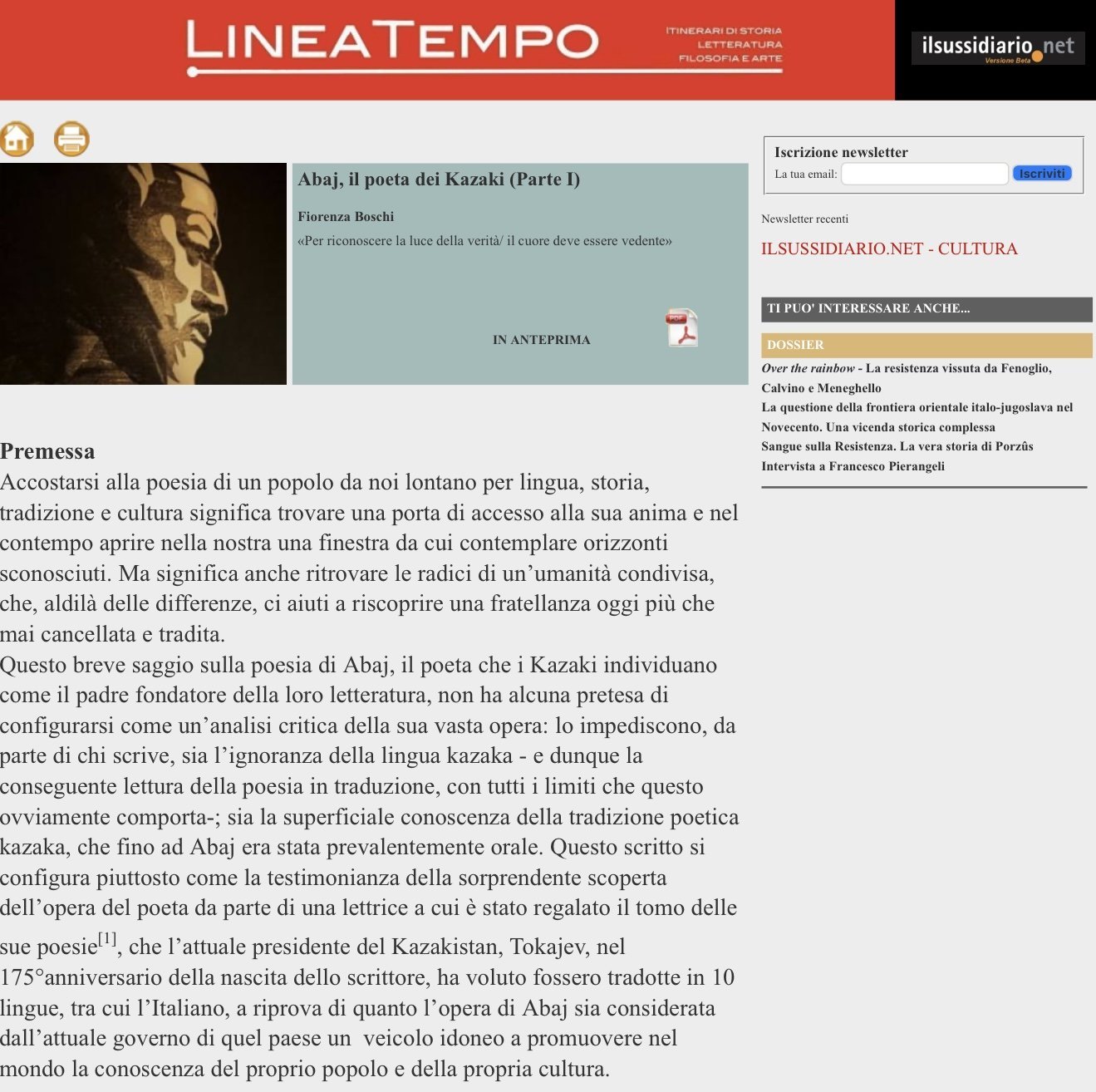
She opens the essay with the line:
Approaching the poetry of a people distant from us in language, history, tradition, and culture means finding a doorway into their soul, and at the same time opening within our own a window through which we can gaze upon unknown horizons. the original article can be found here.
Kazakhstan Through Italian Eyes
Fiorenza has visited Kazakhstan once before, traveling to Almaty three years ago.
I experienced the famous Kazakh hospitality and came to understand values that Abay cherished: love of nature, the importance of traditions, family bonds, respect for elders, and pride in belonging to a strong and proud people.


She believes Kazakhstan should promote its culture abroad more actively, through quality translations and cultural events. While Kazakh culture is still little known in Italy, she notes that the Kazakh community in Milan is growing. She also sees potential interest among young Italians, particularly those concerned about the environment.
In my opinion, young Italians, who care deeply about ecological issues, might be drawn to the culture of nomadic peoples who lived in harmony with nature.
Looking Ahead
Fiorenza hopes her article will spark interest in Abay among Italian scholars, and she plans to continue sharing Kazakhstan’s cultural heritage with Europe.
The journal on literature, history, philosophy, and art that published my article is issued in April, August, and December. Because my piece is a short essay, it was split into two parts: the first appeared in April, and the second will be published in August. I hope to hear some feedback in the coming months, says the Italian.

For Fiorenza, discovering Abay was a revelation that also awakened her curiosity about Central Asia. She now hopes to find more translations of the region’s literature — because without them, she says, the language barrier remains an insurmountable obstacle.
Original Author: Yegor Grozny
Latest news
- Damaged Baikonur Launch Pad Facility Restored After 2025 Collapse
- A Rare Black Melanist Wolf Was Shot in Eastern Kazakhstan
- Kazakhstan Maintains Neutral Stance on Middle East Escalation
- Kazakh MFA: Citizens Evacuated from the Middle East via Oman and Saudi Arabia
- Kazakhstan to Spend 4.6 Trillion Tenge on Road Projects Through 2029
- Central Asia Competes for the Skies: Why Kazakhstan Risks Falling Behind Uzbekistan on Jet Fuel
- The War in Iran Opens a Window of Opportunity for Kazakhstan’s Oil Sector, Analysts Say
- Iran Conflict Escalates Beyond the Gulf: What Kazakh Experts Say About Risks for Central Asia and Kazakhstan
- Kazakhstan Prepares Possible Evacuation of Its Citizens From Iran
- LRT in Astana Is Reaching the Finish Line: The Launch Is Expected in the Coming Months
- Kazakhstan Ready to Help the UAE Amid Escalation in the Region
- Tokayev Discusses Middle East Escalation With Qatar’s Emir
- Airlines Ready to Bring Kazakhstanis Home From the Middle East
- Tokayev Sends Support Messages to Gulf Leaders Amid Regional Escalation
- Kazakhstan Bans Its Airlines From Flying Over Several Middle East Countries
- Astana Strengthens Security Measures Amid Escalation Around Iran
- Tokayev Meets U.S. Ambassador Stufft, Discusses Board of Peace Cooperation
- Mangystau Launches AI-Assisted School Monitoring to Prevent Teen Suicidal Behavior
- Kazakhstan to Supply UK With Critical Minerals
- AI Faculties for Educators to Open in Kazakhstan: What Other Changes Are Coming to the Education Sector
