

Gaziz Abishev Comments on Senate Abolition Proposal, AI, and Kazakhstan’s Future
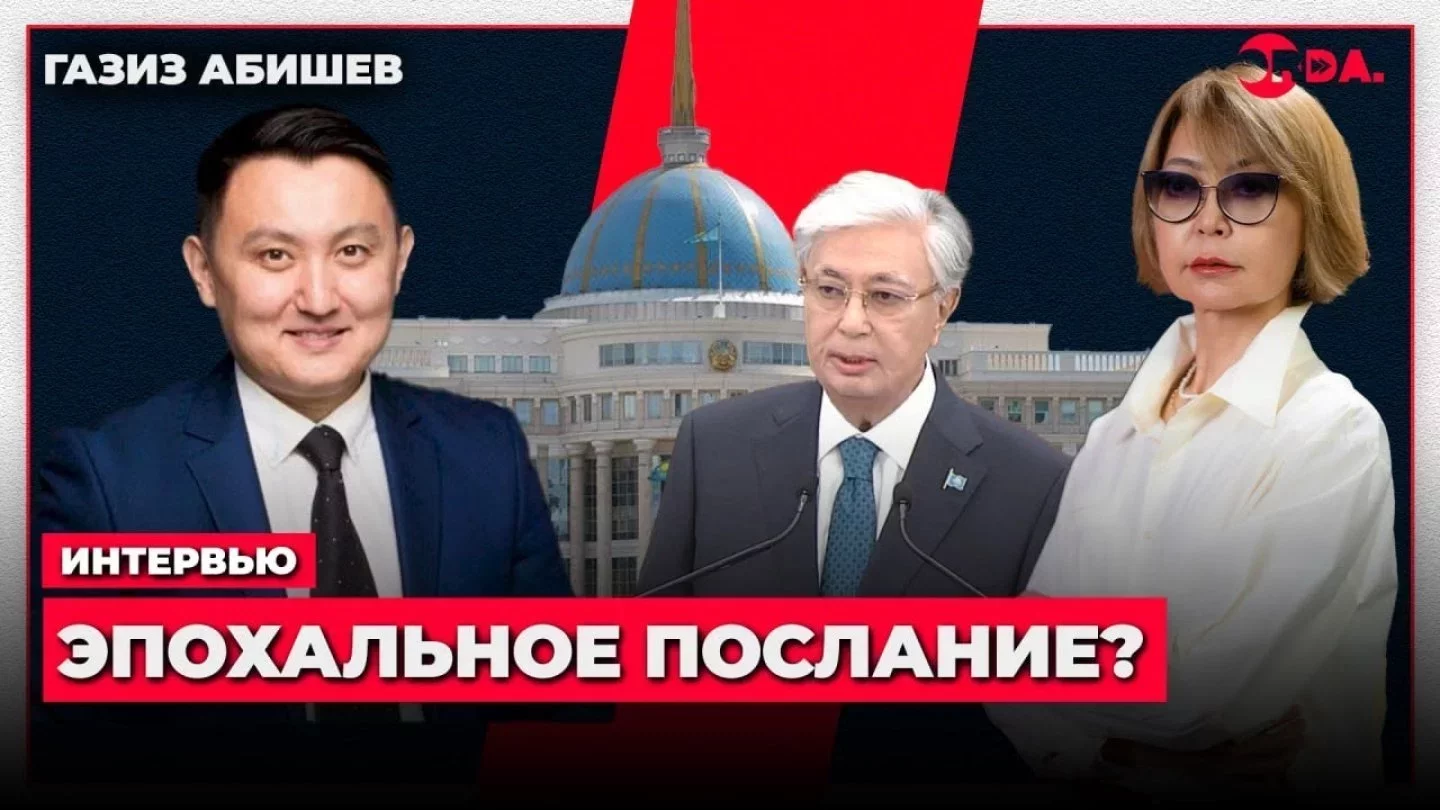 Photo: Orda.kz
President Qasym-Jomart Toqayev delivered another address to the nation. The headline proposal was the abolition of the Senate. The president also gave special attention to artificial intelligence, ordering the creation of a new specialized ministry.
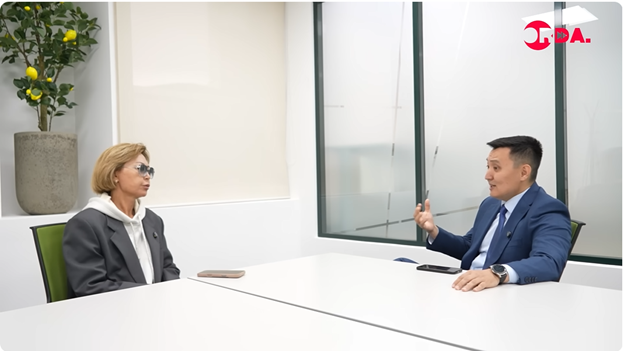
At the same time, some observers remarked that the head of state appeared somewhat tired. Orda.kz’s Gulnara Bazhkenova spoke with political scientist Gaziz Abishev about the key points of Toqayev’s speech and how it was received.
The Emphasis
According to Gaziz Abishev, Toqayev’s latest address stood out for its strong emphasis on digitalization and modern technologies. He argues that this focus became the central theme of the president’s speech.
I think the message was digital. The key word was artificial intelligence. And at the end, the president tacked on a section about political reforms, Abishev said.
In the expert’s view, this prioritization shows that technological modernization is becoming the dominant item on the state agenda, pushing traditional political issues into the background.
Commenting on perceptions that the president looked tired, Abishev offered a practical explanation tied to Toqayev’s recent foreign trip.
The president spent five days in China, with a packed schedule of negotiations. I don’t think his schedule allows him to go to bed at 9:30 and wake up fresh at seven in the morning, Abishev said.
He went on to describe the president’s manner as consistent with professional diplomacy.
Physiologically, he was in his usual form. I don’t think he has ever displayed active emotionality, like Trump. He operates in a studied Foreign Ministry style, steady and deliberate—like a train.
As for the atmosphere in the hall during the speech, Abishev gave a realistic assessment:
It was mixed. Some people took notes, some listened attentively, and some nodded off. When there are 500 people in the hall, you can’t expect uniformity.
“You Can’t Shake Up the System”
Abishev sees Toqayev’s proposal to abolish the Senate as part of a broader effort to strengthen parliament.
There is a movement toward a stronger, more influential parliament. With the elimination of the Senate and the creation of a unicameral parliament, it should indeed become more powerful.
He explained that the current division of powers between the Majilis and the Senate complicates decision-making:
The Majilis approves the Prime Minister, coordinates members of the government, works on the budget, initiates legislation, and hears reports from the Supreme Audit Chamber. The Senate approves members of the Supreme Court, the head of the National Bank, the National Security Committee, and the Prosecutor General. Each chamber also appoints members of the Constitutional Court.
According to Abishev, consolidating these responsibilities within one chamber should make parliament more effective:
Now all this will be done by a single chamber, with one chairman. Each deputy will vote for both. In total, parliament should become more influential.
He also noted a change in the system of checks and balances: the bicameral structure previously gave the executive branch room to maneuver.
If the Majilis had turned opposition in the 1990s, Nazarbayev could block its decisions through the Senate. With a united parliament, there will be no such balancer.
Abishev sees the reform as a delicate attempt to find middle ground between excessive concentration of power and weakening the system too much.
The president does not want a future leader to again concentrate all powers in his hands, taking the republic back to past practices. On the other hand, destabilizing the system is also dangerous, given Kazakhstan’s vast territory, small population, and geopolitical environment. This is a very subtle path—to strengthen parliament so it can balance the president, but without destabilizing the entire political structure.
Party Competition: Reality or Imitation?
Toqayev also proposed eliminating single-mandate deputies in a new unicameral parliament. According to Abishev, the shift to a system based entirely on party lists is meant to foster more structured political competition, similar to developed democracies.
Still, he admits that for now, much of this competition remains behind the scenes.
When asked why the president proposed excluding single-mandate candidates and leaving only party lists, the political scientist explained it as an effort to form a stable political establishment:
I think the goal is to see several—three or four—strong establishment parties emerge that would share about 80 percent of the same national values but still have some differences. They would compete in elections through party lists, fighting as parties, so that those who enter parliament wouldn’t pull the country’s course in separate directions.
Abishev drew parallels with Western democracies, noting that even there, politics is guided by elites rather than grassroots democracy.
In most developed parliamentary democracies — whether the United States, the United Kingdom, or Germany — regardless of the number of chambers, the establishment rules. There is no grassroots ochlocracy. A few hundred people from the party elites of several parties govern, together forming a single conglomerate.
When skeptically asked whether pro-government parties would genuinely compete, Abishev answered realistically but with cautious optimism:
I hope that the source codes — the control panels — of different parties in Kazakhstan will be distributed among conditionally independent groups within the broader establishment, and that they will genuinely compete. They will be united by a sense of belonging to a common national elite moving the country forward, but they will still fight among themselves.
He recalled oligarchic groups from the Nazarbayev era who, though hostile to each other, played by the rules. In his view, something similar could emerge in the party system — but this time united not around one individual, but around national interests.
Abishev also rejected the idea that there are no genuine discussions within the current parliament:
In Kazakhstan’s parliament, even within the largest party, there are heated debates on a range of issues. Two deputies may push opposing views on taxation, education, healthcare, the major economy, and foreign policy, fiercely lobbying against each other.
As an example, he pointed to the recent scandal over the expulsion of a student from NIS, where deputies openly clashed.
Smirnova, Aimagambetov, and Abenov took opposing positions. That’s a symptom — an outburst showing that everyone has their own opinion. It’s not that one person decides, and the other hundred just sit quietly.
According to Abishev, there is real competition among deputies, even if it is less visible to the public than in Western countries.
Some deputies align on certain topics and clash on others, forming situational alliances. They compete fiercely, and in some cases, genuinely dislike each other. It’s entirely possible this could spill into the public arena and take the form of open political struggle.
As for limiting presidential power, Abishev expressed skepticism that the reforms would radically change Kazakhstan’s system of governance:
Constitutional reform will not transform our republic into a parliamentary one. It will remain presidential-parliamentary, because the Constitution preserves provisions that the president determines the main directions of domestic and foreign policy, serves as supreme commander-in-chief, nominates the prime minister, and can dissolve parliament if necessary.
Will MPs Fear The President?
The expert acknowledged that if an authoritarian leader came to power, parliament could theoretically unite against him. Asked whether an open confrontation between MPs and the current president is possible, Abishev gave a sober assessment of the balance of power:
If MPs go head-to-head with the president on fundamental issues, I think statistically the president’s position will prevail much more often.
However, when asked whether parliament would be able to stop a “monster” if one appeared in Aqorda, Abishev gave a more hopeful response:
If such a person grossly violates norms and presses on society’s most painful points, then at some critical moment parliament will be able to unite and speak out against him. Whether it will succeed, I don’t know. I think the current president will be extremely careful about whom he supports as a successor — very careful. Most likely, that analysis is already underway.
According to him, active debates will continue throughout the year, including on single-mandate constituencies, and the final decision could be adjusted.
He assumes the referendum will be held in the first half of 2027.
Illicit Assets: From Hard Measures to Soft Approaches
One unexpected element of Toqayev’s address was the transformation of the Asset Recovery Committee into the Investor Protection Committee. In practice, this is not simply a renaming, but a fundamental change in the state’s approach to big business.
Abishev admitted that asset return was not a central focus of his analysis but offered several explanations for the shift:
Most likely, several factors were at play. Some businessmen secured their assets well in international jurisdictions, and investigators realized that excessive zeal could cause consequences abroad.
He believes that over three years of the committee’s work, the elites reached an understanding, prompting many businessmen to choose the “soft way”:
They had two options: the hard way through the Asset Return Committee, or the constructive way. And what is the constructive way? The president said: charity, invest in real projects, stay out of politics, behave decently and nobly. I think many chose the soft way.
Abishev concluded that the main objectives of forced asset return have already been met:
Everything that required a hard approach, I think, has already been implemented.
At the same time, he did not rule out a return to tougher measures if necessary:
If in two or three years new cases suddenly emerge requiring asset recovery, I think the state will do whatever is necessary.
Ministry of Artificial Intelligence: “Better to Overinvest Than Underinvest”
Another widely discussed decision in Toqayev’s speech was the order to create a Ministry of Artificial Intelligence.
Abishev explained this focus as a response to global trends and strategic considerations.
Most leaders, heads of state, are captivated by the idea of artificial intelligence because the industry is growing. But there is a difference: some argue that the field is overvalued and that certain investments may be excessive. In the case of AI, however, it is better to overestimate the importance of the technology than to underestimate it. If you overestimate AI, put in 100% of your effort, and the return is only 70%, that is still a less dangerous scenario—it is better to overinvest than to underinvest. But if the opposite happens, the return could be truly enormous, and everyone else will be left too far behind.
He emphasized that paying heightened attention to AI is preferable to neglecting it, especially as new examples of neural networks’ effectiveness keep appearing, from medicine to data analytics.
The president’s message also touched on the legalization of cryptocurrencies. Abishev believes Kazakhstan will move in this direction cautiously, drawing on the expertise of a younger generation of financiers.
I think legalization will happen, but carefully. They will work with cryptocurrency.
Abishev illustrated the volatility of the cryptocurrency market with a personal story about friends who invested in bitcoin:
I have friends who were sitting there, knees shaking, when they invested in bitcoin at $30,000. They said: this is the biggest risk of our lives. Now bitcoin is around $100,000, and they’re happy. They say they won’t sell until it hits a million.
On the upcoming banking law that will regulate digital assets, Abishev expressed confidence in the team drafting it:
In the fintech sector of public administration, there are very smart guys who studied in America and Britain—at the National Bank and around it. They look at the situation quite objectively. In the anti-fraud center, in digital currency, there are bright young people—a new generation of Kazakhs—who will handle this technically. I believe in them.
Milk Wars
The president’s message also touched on the dairy industry and the difficulties faced by Kazakhstani producers within the Eurasian Economic Union (EAEU). Abishev sees this as a call for protective measures against subsidized products from Russia and Belarus.
He explained how Kazakhstan's producers are losing out:
Since the 2014 sanctions, Belarus and Russia have been heavily subsidizing their agriculture and have secured food independence. Remember when they crushed imported cheese with tractors in 2015? They built entire industries which, thanks to economies of scale, now beat our producers when they enter Kazakhstan.
He stressed that raising the issue in the president’s message signals to Kazakhstani representatives in Eurasian bodies that tougher negotiations are needed:
This is a signal to our officials—including greetings to Kazakhs in the Eurasian Commission: explain however you want that if our agriculture dies and hundreds of thousands of our people are forced into exile, this will destabilize the country and provoke anti-Eurasian sentiment.
Abishev underlined the scale of the problem, noting that Russia is Kazakhstan’s largest source of imports, with food products alone amounting to several billion dollars.
He admitted that protective measures could hurt consumers but considered them necessary to save the domestic industry:
Of course, this will lead to higher prices, maybe a temporary drop in quality, and the burden will fall on consumers. But at least it will give some relief to the people working in this sector.
Even the weakening of the ruble to 6.5 tenge, he noted, has not significantly reduced the competitiveness of Russian goods—meaning Kazakhstan must find new ways to protect its market.
Original Author: Zhadra Zhulmukhametova
Latest news
- Tokayev Criticizes Banks For Delaying QR Payments
- Kazakhstan Launches New Preferential Loans For Livestock Breeders
- Rare New Guinea Monitor Lizards Arrive At Almaty Zoo
- Malaysian Automaker Proton Eyes Kazakhstan Production With Allur
- A Russian Teen Who Crossed Into Kazakhstan on Foot Wins Appeal Against Expulsion
- Regional Revenues, Global Instability, And The Referendum: What Tokayev Told Deputies
- Digitalization Of Customs Or New Barriers? What Entrepreneurs Fear In Kazakhstan’s New KEDEN System
- Astana Could Become An International Aviation Leasing Hub
- Kazakhstan’s First Tagged Eurasian Black Vulture Found Dead in India
- Kazakhstan Replaces Russian Turbines With Chinese Equipment for Ekibastuz Power Plant No. 2
- How Kazakhstan, Uzbekistan, And Azerbaijan Will Export Electricity To Europe
- Kazakhstan Explains How Russians Who Fled Mobilization Can Be Deported
- Kazakhstan and Japan discuss hydrogen partnership with export potential
- Russia Thanks Tokayev for Initiative to Support Russian Language
- Almaty Could Restrict Cars Under Beijing-Style Anti-Smog Plan
- Tigers in Kazakhstan Are in No Rush to Breed
- What Changes Are Being Prepared Under the New Tax Code
- Alcohol and Tobacco Prices in Kazakhstan See Sharpest Monthly Rise in 15 Years — Analysts
- Middle East Conflict Will Not Lead to Higher Gasoline Prices in Kazakhstan — Minister
- Five Regions of Kazakhstan Face Higher Flood Risk This Spring
