

Astana Ambulance Drivers Struggle with Unfair Repair Costs Despite Insurance
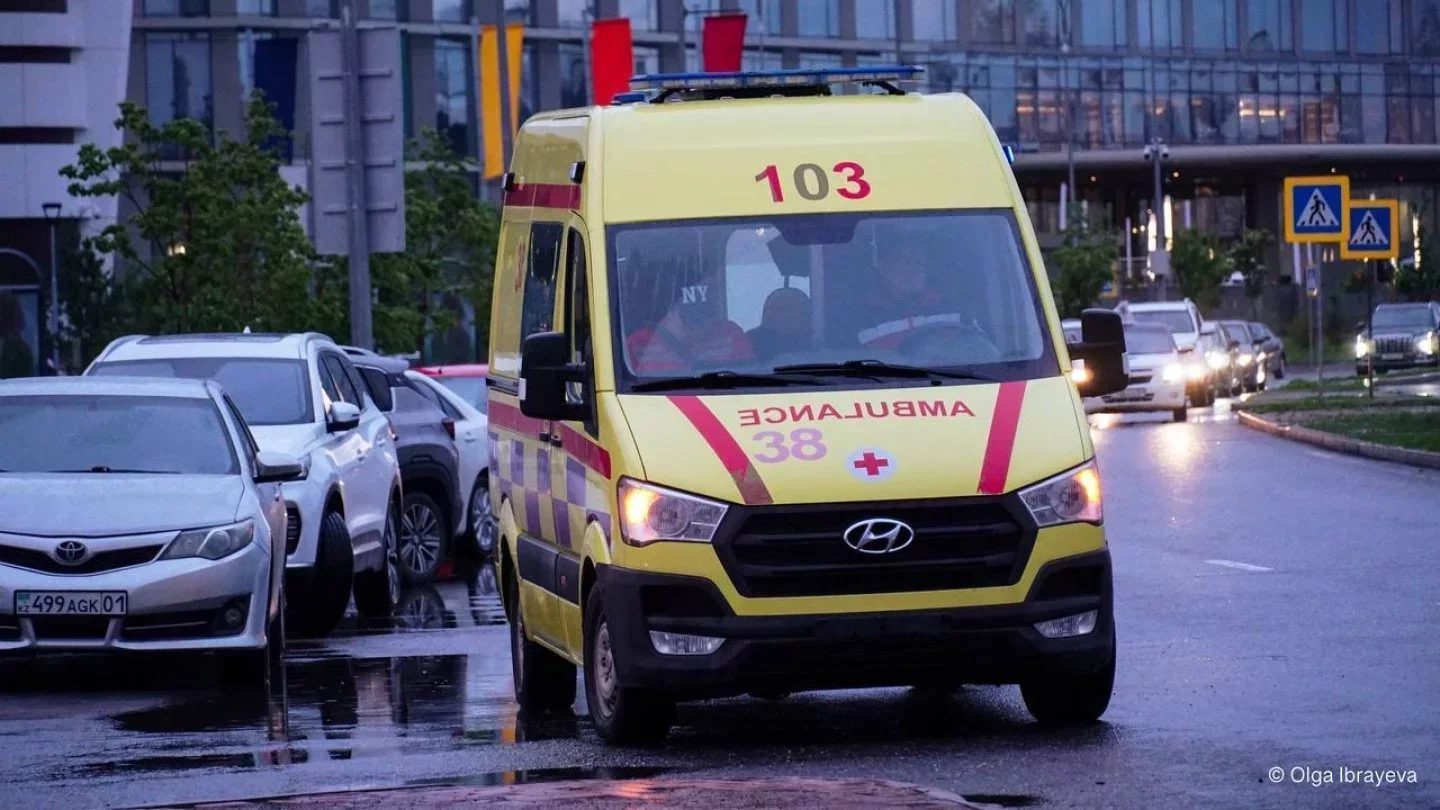 Photo: Orda.kz
Ambulance drivers in Astana face an unjust burden. After getting into accidents while on duty, they are forced to pay to repair official vehicles out of their own pockets. This happens even though, by law, insurance should cover these costs. Orda.kz investigates.
Insurance Fraud and Pressure from Mechanics
One driver, Nurlan Yerkebulan, resigned from his job but was still handed a hefty repair bill. An accident occurred in February 2023 while he was rushing a pregnant woman to the hospital.
We were responding to an emergency, and the patient was in serious condition with a risk of miscarriage. I had to hurry. According to traffic rules, even with sirens and flashing lights, you must ensure other drivers let you through. At that moment, I didn’t. I drove into oncoming traffic and ran a red light. As a result of the accident, the court found me guilty, I paid the fine, and the injured party’s insurance covered their damages.
Although the ambulance should have been insured, the man was told to pay for the repairs.
The mechanics quickly led me astray, insisting that I would have to cover the repair costs myself, no matter the circumstances. I was new to this and didn’t know all the details at the time. When a traffic officer asked whether I would take a medical exam, a mechanic on duty informed me over the phone, ‘Not necessary, you’ll pay for it yourself anyway.’ I believed him.
Later, Nurlan discovered that the insurance would have covered the repairs — if only he had undergone a medical examination immediately after the accident.
In court, they claimed I forwent the medical exam myself, but that’s not true.
A Rigged System: Inflated Repair Costs
Nurlan divulged a pattern of systemic exploitation where ambulance drivers in accidents were forced to pay for repairs — often at highly inflated prices.
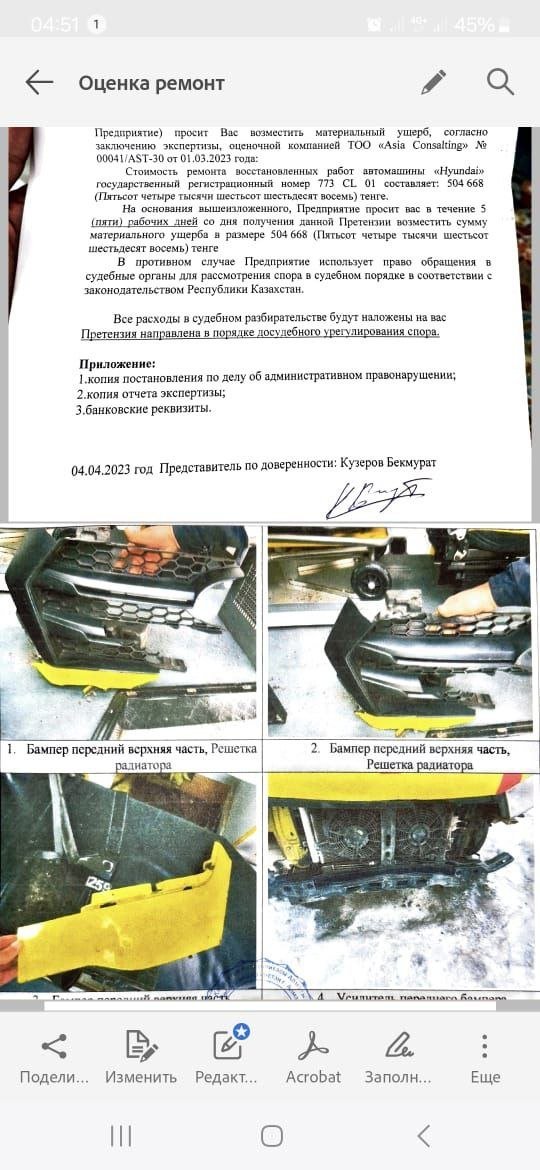
At my substation, a driver damaged only the front bumper and grille, yet he was charged over a million tenge. After negotiating, the amount was reduced to 500,000. The main substation has its own service station, where mechanics are ambulance's salaried employees, but they still charge drivers as if they were a private workshop.
Nurlan’s case followed a similar pattern.
When I was told to pay for repairs, I found spare parts — a bumper, a grille, and a bumper cover — for 214,000 tenge. I brought them to the station and asked to have them installed. However, the mechanics refused, stating that everything had to go through an appraisal company, as it should. I quickly realized that the amount would be inflated.
Sure enough, the appraisal company valued the repairs at 700,000 tenge, later adjusting it to 500,000 after depreciation; 100,000 tenge was just for the mechanics' services.
I could have installed the parts myself, but they didn’t allow it. Because they have a scheme: they install old parts while the new ones disappear. They know drivers can be burdened with huge costs, and they take advantage of it.
Corruption
Nurlan claims that the entire ambulance system was built to financially exploit drivers and paramedics.
Paramedics lost bonuses for fictitious reasons. The garage manager, head mechanic, and the chief physician had their scheme that worked for many years. Even if a driver accepted the unfair conditions, he was still provided with old parts while the money ended up in management's pockets.
In 2023, the head of the ambulance service, Murat Orazbayev, and several mechanics and accountants involved in these schemes were arrested for corruption. The new management attempted to address past wrongdoing, but Nurlan’s case remained unresolved.
After confronting the administration, he was fired under questionable circumstances.
If you complained or stood out, HR would find a reason to fire you. First, I was blamed for a paramedic’s lateness, even though I was there. Then, I was accused of leaving a vehicle unlocked from which, allegedly, medicine had disappeared.
Nurlan won a lawsuit proving that the vehicle had been in working condition and that no new parts had been installed.
He is still fighting a separate case against the appraisal company for tripling the cost of repairs.
Fire, Rescue, and Lifelong Debt
Another ambulance driver, Zhasulan Amangarinov, faced an even harsher fate. Working from 2012 to 2016, he got into an accident in 2015 and was left with a staggering five million tenge debt for a company vehicle.
Despite the accident happening during work hours, the ambulance management refused to cover the insurance costs and successfully reclaimed the money through court. Years later, he is still paying off the debt.
He wasn’t even scheduled to work that night, but after repeated calls due to a driver shortage, he came in.
The call came early in the morning — a woman reported that her sister and nephew were not answering the phone. They lived in a remote village near Ilyinka.
She mentioned that her nephew had called, but the connection dropped. She attempted to call back, but no one answered. She expressed her concern and wasn't sure what had happened. We left right away, he recalls.
The woman guided the ambulance along the highway to her sister's house. As they neared, it became evident that the situation was critical — thick smoke billowed from the windows and doors. There were no rescuers or neighbors in sight; it was early morning, and everyone was still asleep.
We arrived and saw that the house was already on fire, with smoke pouring out from all sides. The woman was panicking, and no one was around.
Rushing inside, Zhasulan found the boy unconscious, still clutching a phone, with his mother beside him. He carried the boy outside, and paramedics helped save the woman. They were quickly hospitalized, and both survived.
A few hours after the incident, Zhasulan Amangarinov was on his way back to the base. He needed to wash the ambulance and hand over his shift. On the drive back, he felt a headache but brushed it off, unaware that he had already been poisoned by carbon monoxide.
We were driving along the bypass road. I saw a snowplow in the distance, but in a split second, everything went black — I only came to after the impact.
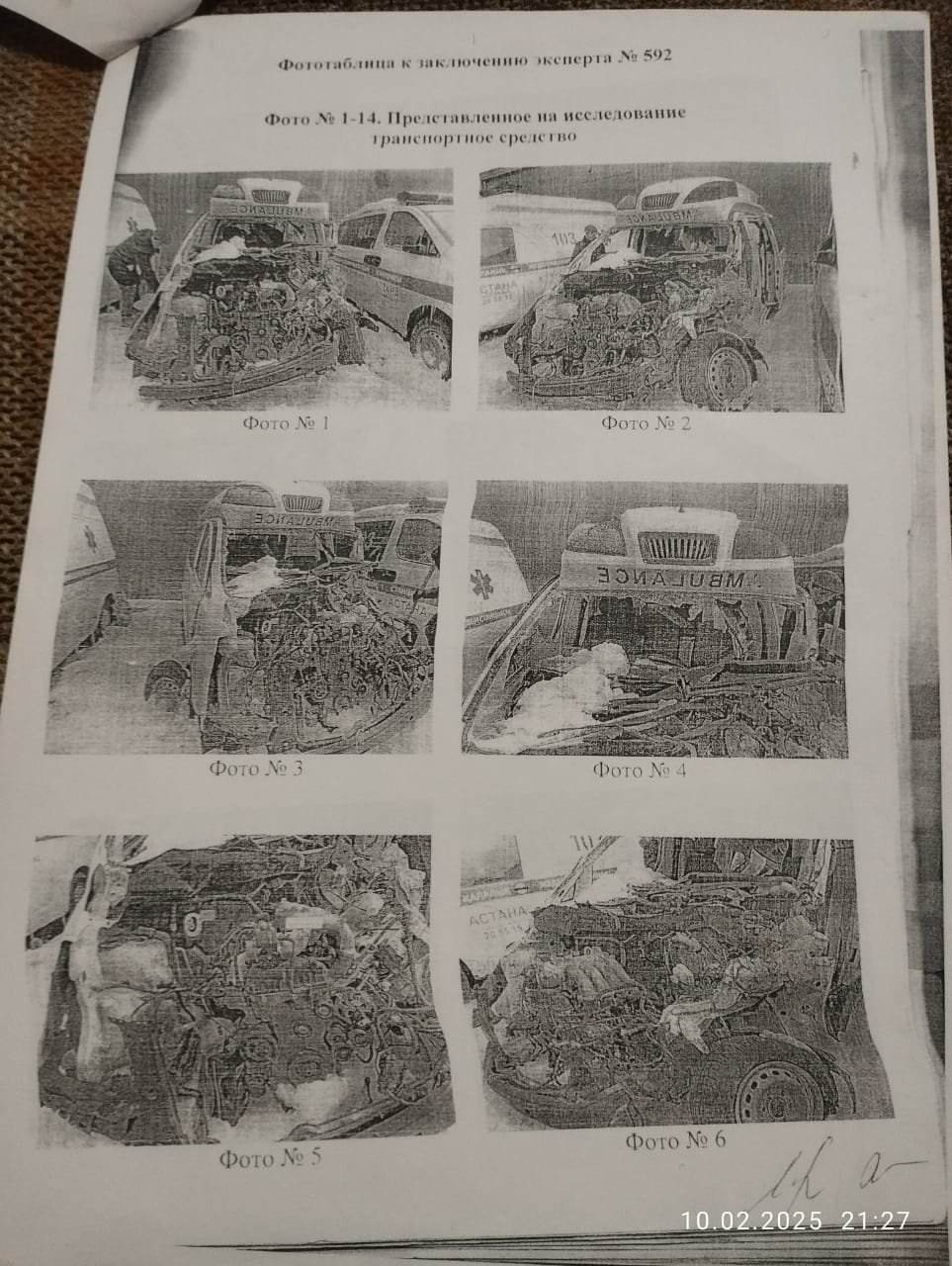
The ambulance crashed into a forklift, striking the driver’s side. Zhasulan was trapped inside and unable to move.
I was stuck. I had a broken leg, arm, and rib cage. My whole body felt paralyzed — I couldn't move.
Rescuers had to cut him out of the wreck. He spent three days in intensive care and a month recovering in the hospital.
While Zhasulan was still recovering, lawsuits started piling up against him. The first came from a medic in the ambulance during the accident. He believes she was pressured by hospital management to take legal action.
She claimed she injured her knee and demanded 1.5 million tenge from me. I was on crutches myself, barely beginning to recover, but they pressured me. In the end, she settled for 400 thousand. I told her, ‘You know this was force majeure, right?’ But she didn’t back down — she probably needed the money.
Then, the ambulance service sued him, demanding compensation for the damaged vehicle.
I went to the head doctor and explained that I could repair the car if they gave me time. I even offered to pay in installments. But they wouldn’t hear me out. They just fired me—under an official article, too. They threw me out; I didn’t even get a chance to recover.
The ambulance was initially valued at 17–18 million tenge. After a lengthy legal battle, the court reduced the amount to five million.
I hired lawyers and tried to challenge the sum, but the court ruled against me. In the end, I had to pay.
The ordeal also affected his family’s housing situation. His family had been on a waiting list for state-provided housing for large families, but they were removed from the list due to his debt.
We had been waiting in line for 12–13 years. When our turn finally came, we started gathering documents. And then they told me we were removed from the list because of the court debt. I pleaded with the ambulance management and explained the situation, but they refused to help. Just like that, our chance was gone.
Zhasulan Amangarinov wasn’t rewarded or recognized by his employers. Instead, he was left jobless, in debt, and without housing.
If they had shared the rescue story with the media, it would have been good for the ambulance service’s reputation. But they didn’t even say thank me. Instead, they told me I shouldn’t have entered the house — it wasn’t my job. That was for the Ministry of Emergency Situations. But there were no firefighters there. We did what had to be done. Anyone in our place would have done the same.
The ambulance service could have handled the situation differently—offering support, compromising, or not firing him so abruptly.
I loved my job. My team and I had pulled people out of accidents more than once. I felt like I was helping people. But in the end, I was left with nothing—no job, no home, and a mountain of debt.
His colleagues were the only ones who supported him. Fellow drivers and paramedics collected 100,000 tenge to help cover his legal fees.
Years later, Zhasulan is still paying off his debt:
I sacrificed half my health, and they just threw me out.
Ambulances Are Insured, But Drivers Still End Up in Debt
The Orda.kz editorial team contacted the Ministry of Health to clarify whether ambulance drivers are required to personally cover damages for official vehicles involved in accidents.
The Ministry provided an official response:
According to paragraph one of Article 7 of the Law of the Republic of Kazakhstan 'On Compulsory Insurance of Civil Liability of Vehicle Owners,' the operation of a vehicle without a compulsory insurance contract is prohibited."
The ministry then immediately referenced the Civil and Labor Codes, which hold drivers financially responsible for accidents they are found guilty of:
According to Article 917 of the Civil Code of the Republic of Kazakhstan, harm caused by illegal actions or inaction shall be compensated by the person, who caused the damage, in full. Article 123 of the Labor Code states that an employee is liable for direct actual damage caused to the employer due to their fault.
The Ministry mentioned Nurlan Yerkebulan's case in its response. However, Yerkebulan told Orda.kz that he was misled and never properly informed about how insurance should work.
Orda.kz also asked whether the Ministry planned to amend the legislation to exempt ambulance drivers from paying for vehicle repairs, given the high-risk nature of their work:
The work of emergency medical services involves a greater risk on the roads. However, this does not relieve drivers of liability for traffic violations or negligence, the ministry stated.
In other words, if a driver gets into an accident while rushing to save a life, they are still expected to cover the damages — unless they are found not at fault, in which case insurance might step in.
One key concern was why ambulance drivers are frequently billed for vehicle repairs at rates significantly higher than market prices. The Ministry did not address this issue:
Since the beginning of 2024, ambulance stations have closed their service stations and outsourced maintenance through a state tender.
They failed to explain how this outsourcing impacts the issue of inflated repair costs.
When asked why drivers cannot repair ambulances at a fair price, the Ministry argued that this could "jeopardize operational safety."
Despite multiple media reports and legal battles by ambulance drivers, the Ministry claims it has received no official complaints regarding this issue.
Orda.kz also sent a request to the capital's Health Department, but their response mirrored that of the Ministry —offering legal citations rather than real solutions.
When commenting on the case of Nurlan Yerkebulan, they reiterated that he had failed to submit a medical examination certificate after the accident, which they suggested could have affected his ability to receive an insurance payout.
The department also stated that aside from Yerkebulan’s case in 2023, they had not received any official appeals on this issue.
Despite Orda.kz specifically mentioning Zhasulan Amangarinov’s case in its request, the Ministry of Health and the Health Department ignored it.
"Absolute Nonsense!"
Majilis member Askhat Aimagambetov, who has repeatedly raised healthcare issues in parliament, believes the situation with ambulance drivers is entirely unacceptable.
In his view, if an accident occurs while a driver performs their official duties, they should not be forced to pay damages out of pocket for years.
I believe we can protect them and provide assistance. Because it is absolute nonsense that someone driving an ambulance, saving lives, gets into an accident and then has to pay off the expenses for the next ten years, Aimagambetov stated.
He emphasized that the issue is not just about financial claims against ambulance drivers but is part of a more significant systemic problem — including the deteriorating condition of emergency vehicles.
More than 60% of ambulances are outdated. There are concerns about the legal protection of medical workers. That’s why I personally introduced an amendment to strengthen their rights. Just look at what’s happening in emergency rooms — medical staff constantly face interference in their work.
The government is currently reviewing the amendments proposed by parliament. Aimagambetov also pointed out that the problem extends beyond ground ambulances to air ambulances as well.
Original Author: Zhadra Zhulmukhametova
Latest news
- Why Are Kazakhstanis Leaving Southern Regions In Large Numbers?
- Tokayev Criticizes Banks For Delaying QR Payments
- Kazakhstan Launches New Preferential Loans For Livestock Breeders
- Rare New Guinea Monitor Lizards Arrive At Almaty Zoo
- Malaysian Automaker Proton Eyes Kazakhstan Production With Allur
- A Russian Teen Who Crossed Into Kazakhstan on Foot Wins Appeal Against Expulsion
- Regional Revenues, Global Instability, And The Referendum: What Tokayev Told Deputies
- Digitalization Of Customs Or New Barriers? What Entrepreneurs Fear In Kazakhstan’s New KEDEN System
- Astana Could Become An International Aviation Leasing Hub
- Kazakhstan’s First Tagged Eurasian Black Vulture Found Dead in India
- Kazakhstan Replaces Russian Turbines With Chinese Equipment for Ekibastuz Power Plant No. 2
- How Kazakhstan, Uzbekistan, And Azerbaijan Will Export Electricity To Europe
- Kazakhstan Explains How Russians Who Fled Mobilization Can Be Deported
- Kazakhstan and Japan discuss hydrogen partnership with export potential
- Russia Thanks Tokayev for Initiative to Support Russian Language
- Almaty Could Restrict Cars Under Beijing-Style Anti-Smog Plan
- Tigers in Kazakhstan Are in No Rush to Breed
- What Changes Are Being Prepared Under the New Tax Code
- Alcohol and Tobacco Prices in Kazakhstan See Sharpest Monthly Rise in 15 Years — Analysts
- Middle East Conflict Will Not Lead to Higher Gasoline Prices in Kazakhstan — Minister
