

What Can We Expect from Olzhas Bektenov as Prime Minister?
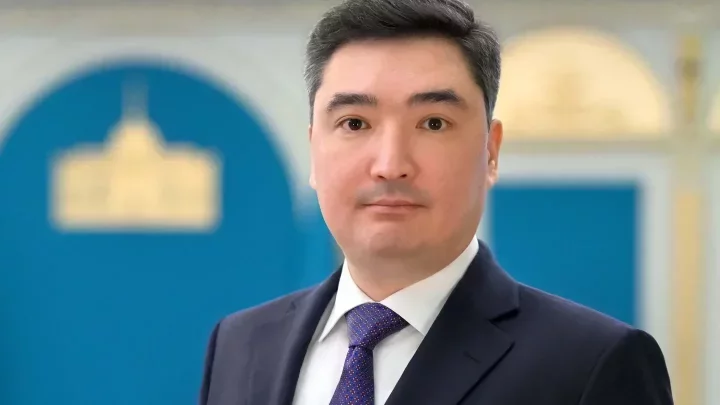
In Astana's political circles, the former head of the Presidential Administration is known for his uncompromising attitude, political commentator Anatoly Ivanov-Weiskopf believes.
The expert community of Kazakhstan had put forward many versions about who could become prime minister of the country if Alikhan Smailov’s government were to resign. Some suggested that if Smailov's cabinet of Ministers resigns, it will be no earlier than April or May.
Others believed that this would happen on February 7, immediately after the expanded government meeting with President Toqayev, where the results of the country's socio-economic development would be summed up. Yet, Alikhan Smailov played ahead of the curve. Without waiting for the "debriefing" scheduled for Wednesday, he resigned on February 5 along with his entire cabinet.
Experts also failed to predict the name of Alikhan Smailov's successor. The potential candidates were the current Almaty akim, Yerbolat Dosayev, ex-Minister of Energy, Kanat Bozumbayev, or Deputy Prime Minister, Serik Zhumangarin. Speaker of the Majilis, Yerlan Koshanov, Minister of Foreign Affairs, Murat Nurtlyeu, Astana’s akim, Zhenis Kassymbek, and the first head of the Mangystau region, Nurlan Nogayev, were also potential candidates.
Interestingly, Roman Sklyar, an ethnic Ukrainian appointed by Toqayev as acting prime minister, was not foreseen as the head of government, even despite his knowledge of the Kazakh language. And certainly, no one imagined that the dominant parliament party AMANAT would propose 43-year-old Olzhas Bektenov to Qasym-Jomart Toqayev at a faction meeting on February 6.
However, Bektenov’s candidacy for prime minister has come from the president. It is believed that Lieutenant General of the anti-corruption service Olzhas Bektenov is part of the still-forming team of civil servants loyal to the current president.
Meanwhile, he is characterized as a good organizer and a tough and principled leader in the corridors of power. This became especially noticeable during his work as chairman of the Anti-Corruption Agency. It can be assumed that the president’s idea of nominating Bektenov was conveyed to the leadership of AMANAT following a meeting between Toqayev and Chairman of the Supreme Audit Chamber, Natalia Godunova, as well as information about the detention and initiation of criminal proceedings against Vice Minister of Ecology and Natural Resources, Mansur Osharbayev.
The fact that Olzhas Bektenov's candidacy was most likely proposed to the AMANAT party almost at the very last moment is indicated by reports from our government sources in Astana.
According to them, most of the nonresident candidates for the prime minister's post, named by experts, were seen in the corridors of the government building of Kazakhstan immediately after lunch on February 5. Yet, extended meetings of the Cabinet of Ministers or parliament held in Astana are usually attended a day before their start at most.
What to Expect?
A large-scale fight against corruption and nepotism that have swept the country will come to the fore. In other words, the legacy of the so-called "Old Kazakhstan". The search for assets transferred abroad by former high-ranking officials may also receive a new impetus. Law enforcement and fiscal authorities may get new authority soon.
It may very well be that the country is also waiting for the optimization of the government, i.e. a move towards its reduction. For example, the Prime Minister might have only two deputies instead of six, while the number of ministries could also be reduced.
The difficulties that Olzhas Bektenov may face are already visible. They are connected with relations at the interstate level, both within the framework of the EAEU and the SCO and at bilateral meetings, where the Prime Minister’s participation is mandatory. In certain circumstances, 43-year-old Bektenov, who has a law degree, may not have enough experience. Only 40-year-old Sergei Tereshchenko and 42-year-old Akezhan Kazhegeldin were younger than him as prime minister.
Indeed, negotiations, for example, at intergovernmental meetings of the member states of the Eurasian Economic Union are often very, very difficult. Knowledge of both the economy and the geopolitical situation is required. The meetings of the governments of the countries in the Shanghai Cooperation Organization are no less complicated.
Original Author: Anatoly Ivanov-Weiskopf
DISCLAIMER: This is a translated piece. The text has been modified, the content is the same. Please refer to the original article in Russian for accuracy. The article has been edited to reflect the current situation as of 07/02/24.
Latest news
- Kazakhstan’s First 50 MW Data Center to Launch in June 2027
- KNB Service Dog Returns to Auction With Minimum Price of About 20 Cents
- Kazakhtelecom Finds No Internal Fault as Telegram Problems Continue
- Telegram Disruptions Reported Across Kazakhstan
- Employee Numbers Rise as Self-Employment Declines in Kazakhstan
- Kazakhstan’s Maritime Companies Earn More From Vessel Charters Than Shipping
- Digital Ministry Comments on Alleged Leak of 15 Million Kazakhstanis’ Data
- German Couple Dies in Akmola Region Highway Crash
- State Agencies to Receive Top Score When Citizens Leave No Feedback
- Kazakhmys Copper Seeks KASE Delisting After Major Dividend Payout
- Ukraine Stops Attacks on Tankers Carrying Kazakh Oil After U.S. Pressure
- Possible Leak of 15 Million Kazakhstanis’ Data Under Investigation
- Kazakhstan Opens Criminal Case Against Journalist Over Report on Russia’s War Recruits
- LRT in Almaty Could Launch by the End of 2027
- Suspect in 2.5 Billion Tenge Cash-Out Scheme Extradited From South Korea
- Possible Illegal Oil Production Reported at Mangistau Field
- Three Detained After Six Workers Die in Sewer Well at Pavlodar Farm
- From Women’s Mortgages to Gen Z: Why Home Loans Remain Hard to Get in Kazakhstan
- Tenge Expected to Weaken to 512 per Dollar Within a Year
- Kazakhstan Collected 35 Billion Tenge From Legal Crypto Miners
